Your component requirements.
Explore the workpiece materials, shapes and production tasks suited to this equipment.

- Component range and incoming contamination
- Cleaning stages for the required finish
- Manual, mechanical or connected handling
- Site utilities, layout and maintenance access
From loading to the next operation.

The process brings together workpiece loading, treatment and transfer to the next operation.
Equipment details.
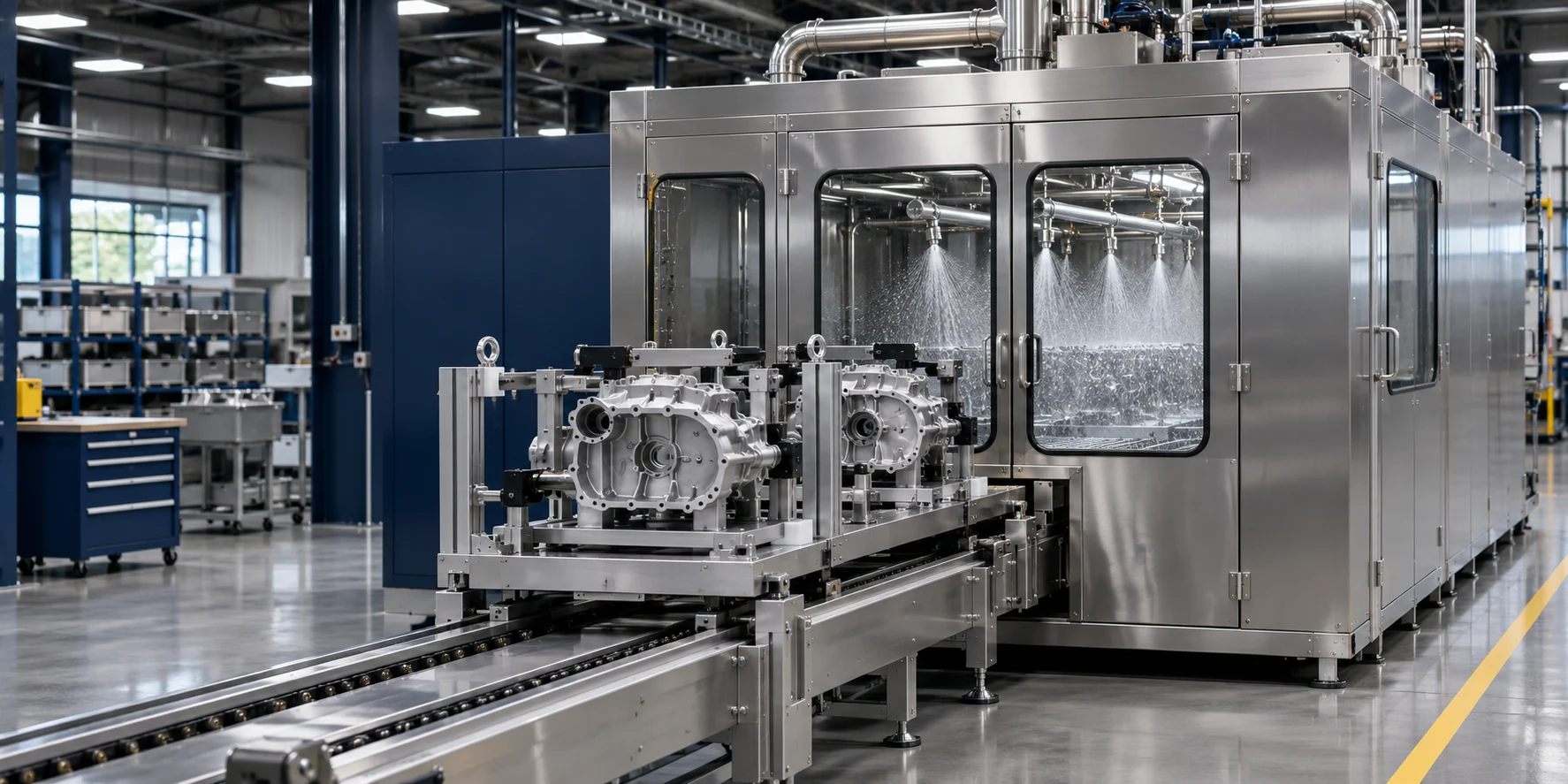
Conveyor washer layout with process enclosure and control console.

Cleaning equipment built around the workpiece.
Material, component shape, incoming contamination and the required finish guide system selection. Part output and the next manufacturing operation determine the loading and transfer needs.

Select the cleaning sequence.
Spray washing, ultrasonic cleaning, rinsing, air blow-off and hot-air drying can be considered for the required part condition. Fixtures and liquid management are planned alongside the process stages.
Fit the system into your line.
The layout connects loading height, available space, controls and site services. Sample evaluation helps refine the process before the equipment proposal and technical agreement.

- Component drawings and incoming condition
- Required finished condition and output
- Loading, interfaces and layout
- Site services, maintenance and acceptance requirements
Your equipment
questions, answered.
Find answers about materials, part handling and inspection or cleaning processes.

How are the cleaning stages selected?
Washing, rinsing, air blow-off and drying are selected for the incoming contamination and required finished part condition. Geometry, cleaning-liquid compatibility and the next production operation also influence the sequence.
Include any specified surface cleanliness and dryness requirements.
How much loading space does a part need?
Loading space includes the component, its supports or fixture, and the clearance required for treatment and transport. Belt width, usable loading width and the process opening are considered separately.
Show the part in its intended loading orientation, including spacing between components.
How is conveyor speed selected?
Conveyor speed works with part spacing and process-zone length to achieve the required output and treatment time. Washing and drying requirements guide the selected movement settings.
Provide the target parts per hour and the planned loading pattern.
What is the difference between output interval and treatment time?
Output interval is the time between finished parts leaving the machine. Treatment time is how long one component stays in a washing or drying zone. Several components can move through different zones at the same time.
Part spacing, conveyor speed and zone length connect output with treatment time.
When is indexed cleaning useful?
Indexed handling is considered when a component needs a fixed position or orientation at a cleaning stage. Fixtures locate the part while the sequence coordinates treatment and transfer.
The required station time, part changes and output guide the equipment arrangement.
Which stages can accompany ultrasonic cleaning?
Ultrasonic cleaning can be combined with rinsing, additional cleaning stages, air blow-off and hot-air drying. Workpiece transfer and drainage connect the stages.
The sequence is selected for the material, contamination and required finish.
How is cleaning performance evaluated?
Surface appearance, dryness and particulate cleanliness are evaluated using the method specified for the component. Photographs show the surface appearance; particle requirements use the specified sampling and measurement method.
Include the required measurement and acceptance criteria in your enquiry.
What should an enquiry for custom cleaning equipment include?
Include the part range, material, incoming contamination, required finish, output and loading preference. Add the available floor space, site services and connections to adjacent equipment.
Drawings and representative samples help develop the equipment proposal.
Can I view technical-cleanliness analysis documents?
Two technical-cleanliness analysis reports are available in the testing and documentation section. They include particle-size results, classifications and microscopy images.
Open the complete PDF to see the extraction and analysis information for each report.
Connect the details.
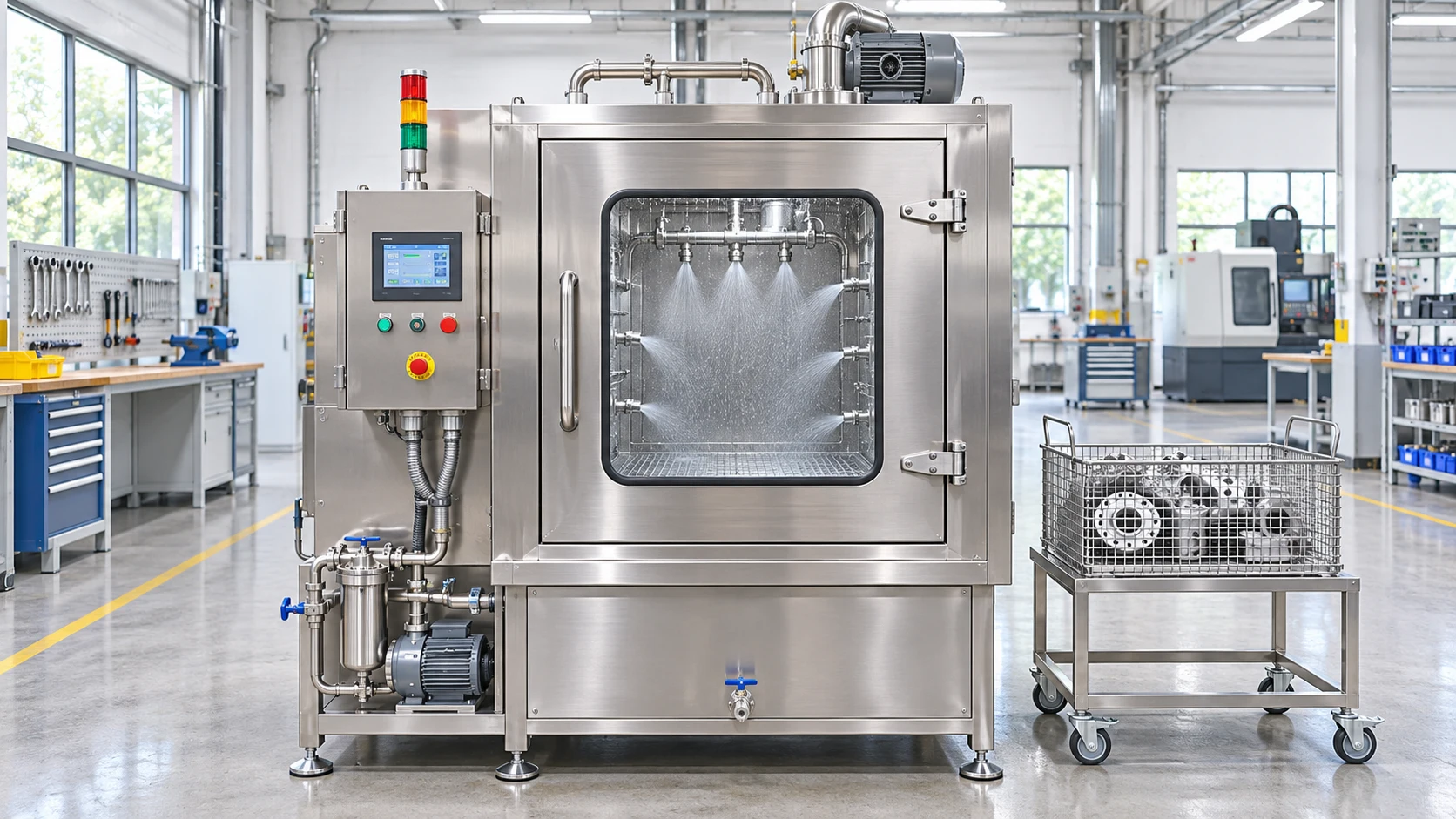
Industrial parts washers
Plan spray washing, rinsing, air blow-off and hot-air drying for machined parts. Compare handling options around contamination, part geometry and required output.
Explore the application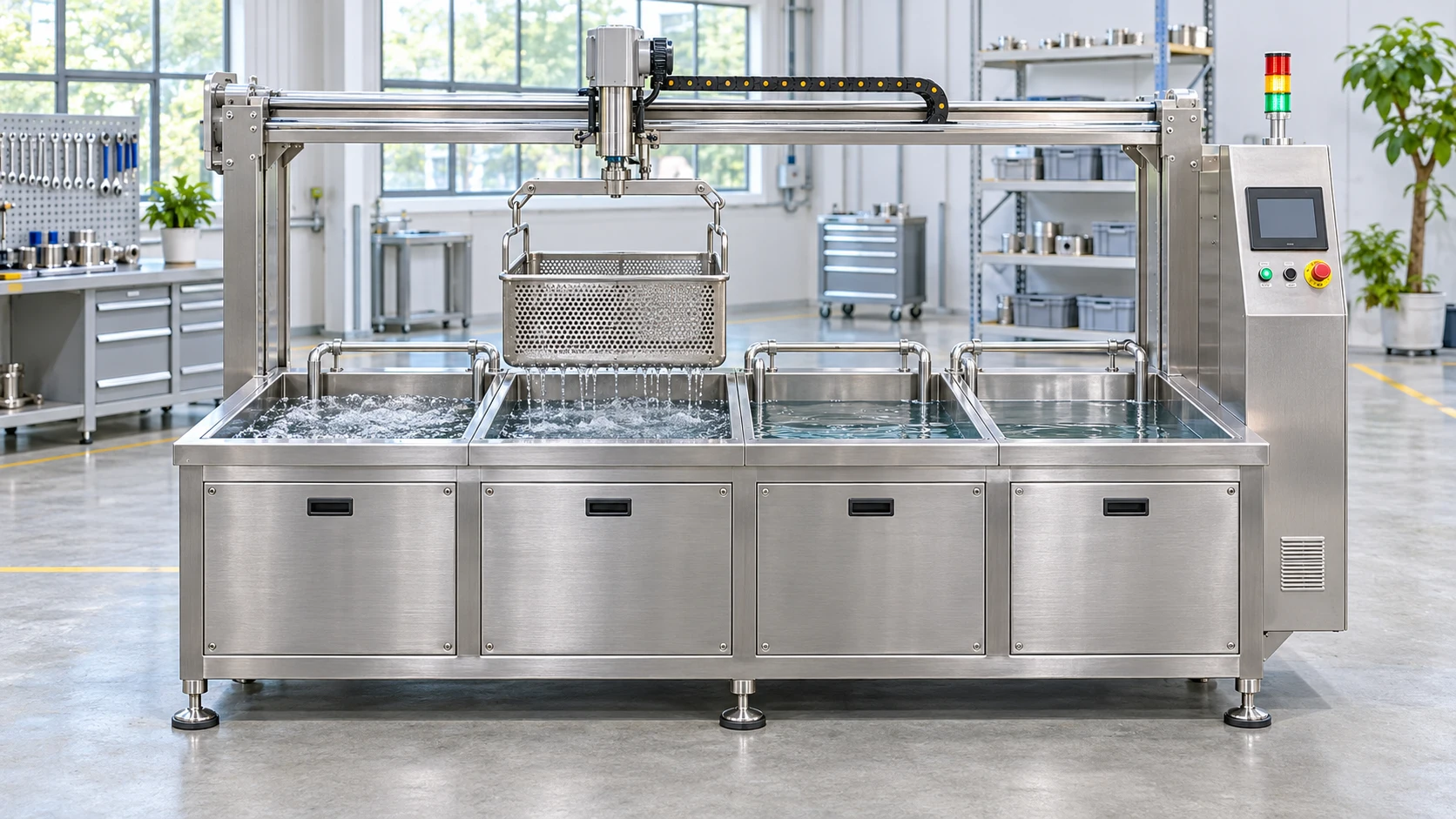
Industrial ultrasonic cleaning systems
Plan ultrasonic immersion, rinsing and drying around your part geometry, basket loads and drainage needs. Define the finished condition before a sample trial.
Explore the application
Engineering the process. Connecting production.
Plan the interfaces between inspection or cleaning equipment and the production line: part transfer, line height, controls, utilities and site acceptance.
Explore the application