Magnetic particle inspection.
Industrial parts cleaning.
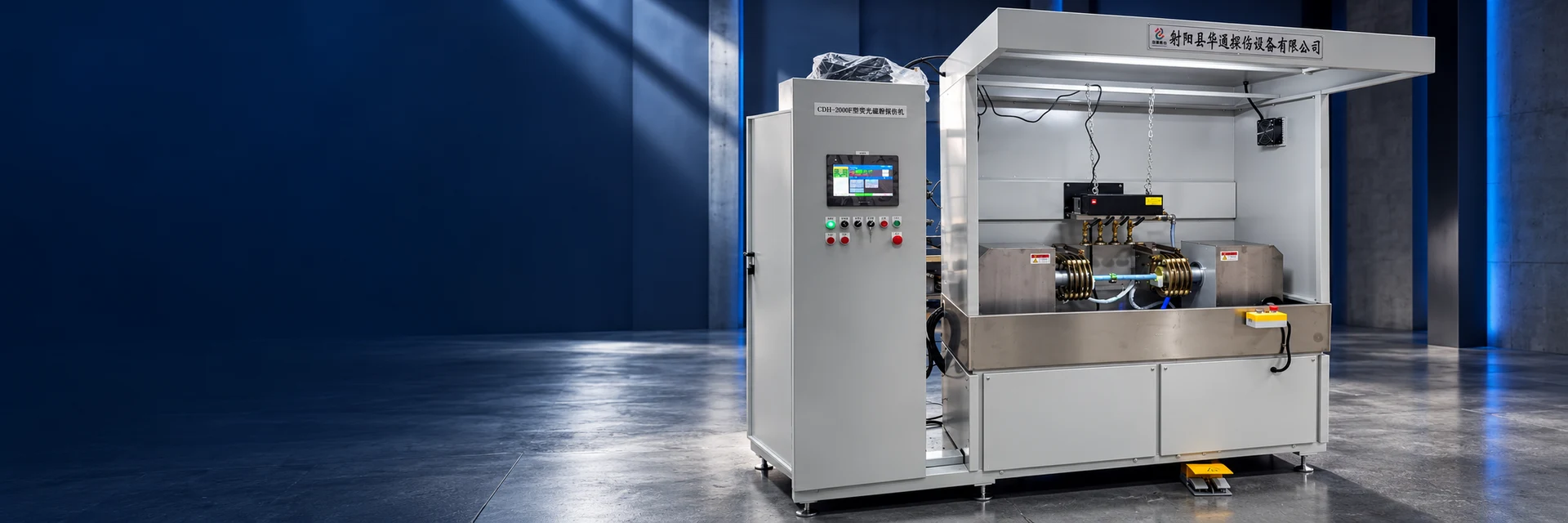
Specify fluorescent inspection around your ferromagnetic parts, inspection surfaces and required output. Compare fixtures, loading and operator access.
Explore inspection systemsInspection. Cleaning.
Connected production.
Explore magnetic particle inspection, demagnetization and parts cleaning equipment for your workpieces and production line.
Explore all equipment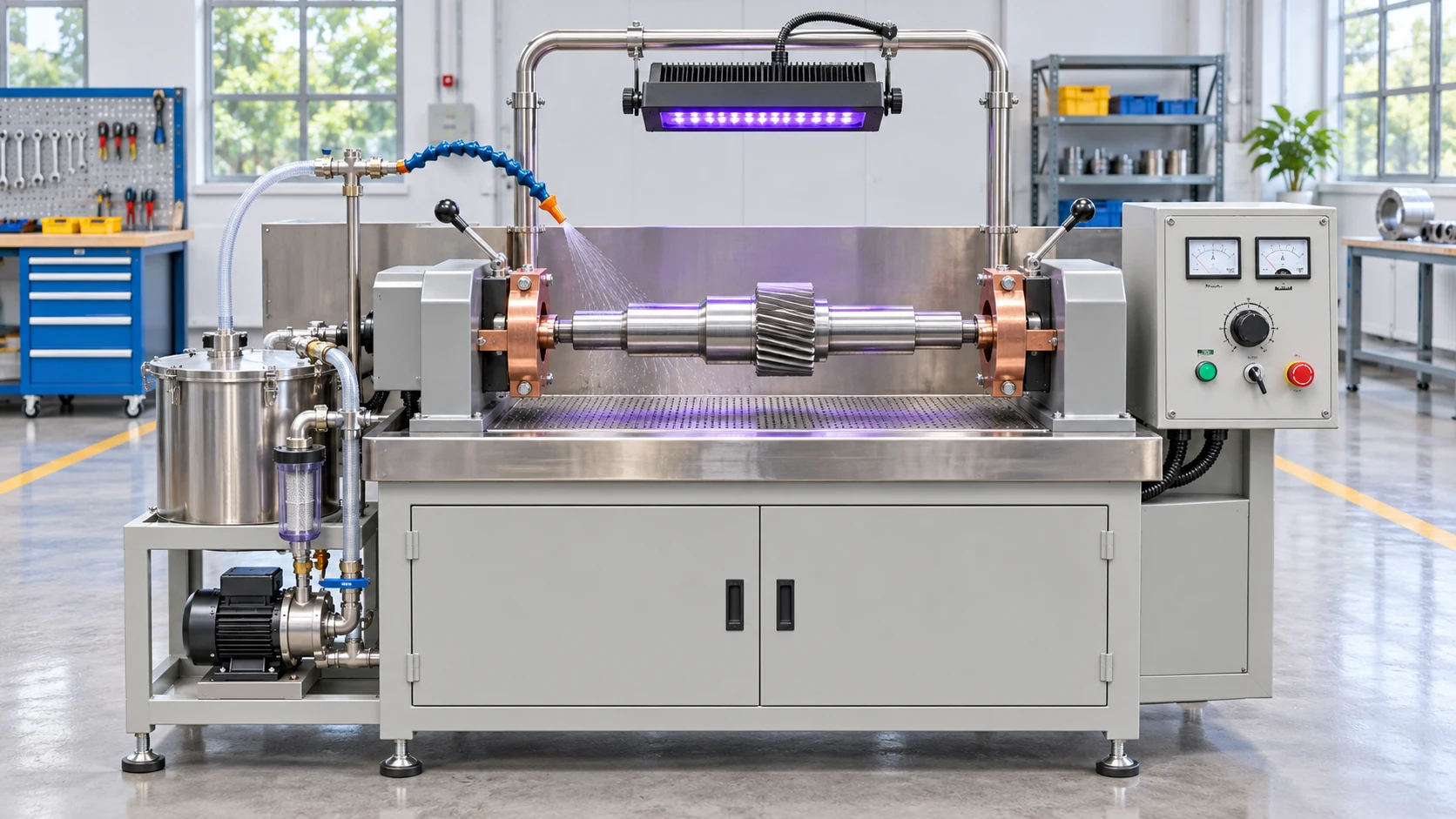
Magnetic particle inspection equipment
Plan fluorescent magnetic particle inspection for ferromagnetic shafts, rings and machined parts. Compare workpiece handling, magnetization and operator access.
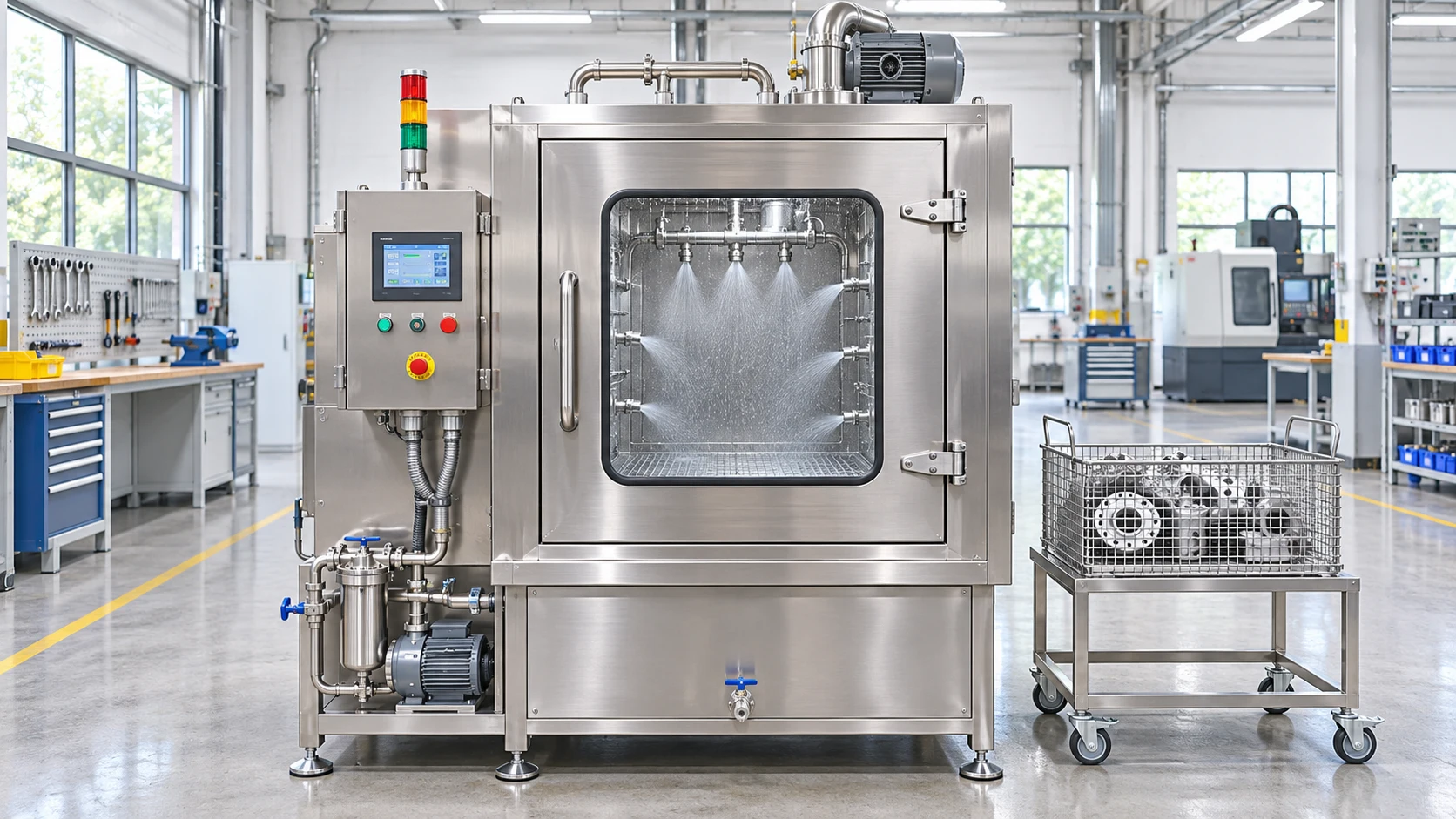
Industrial parts washers
Plan spray washing, rinsing, air blow-off and hot-air drying for machined parts. Compare handling options around contamination, part geometry and required output.
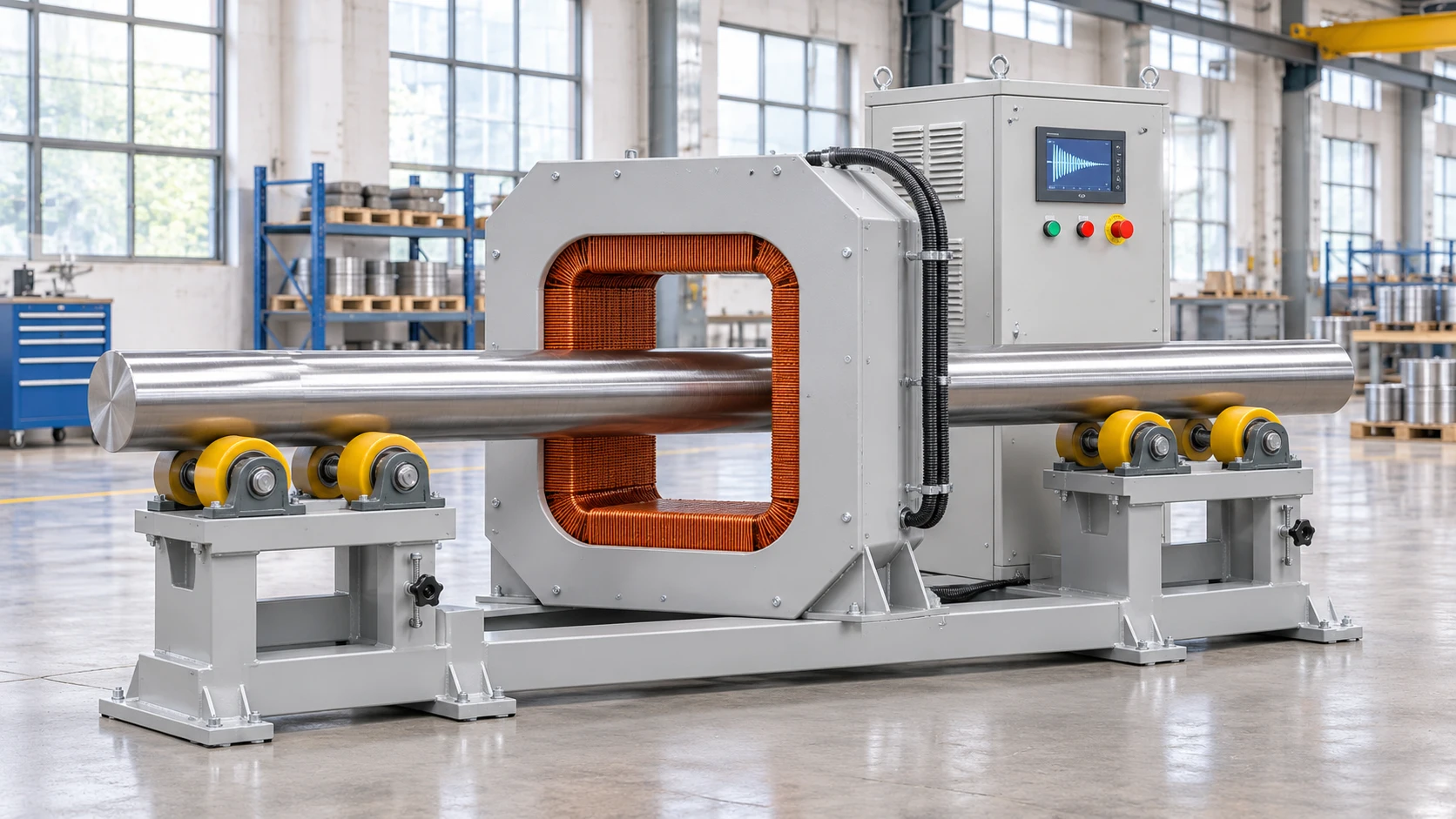
Industrial demagnetization
Evaluate demagnetization for ferromagnetic components after inspection or magnetizing operations. Define part handling, the residual-field limit and measurement points.
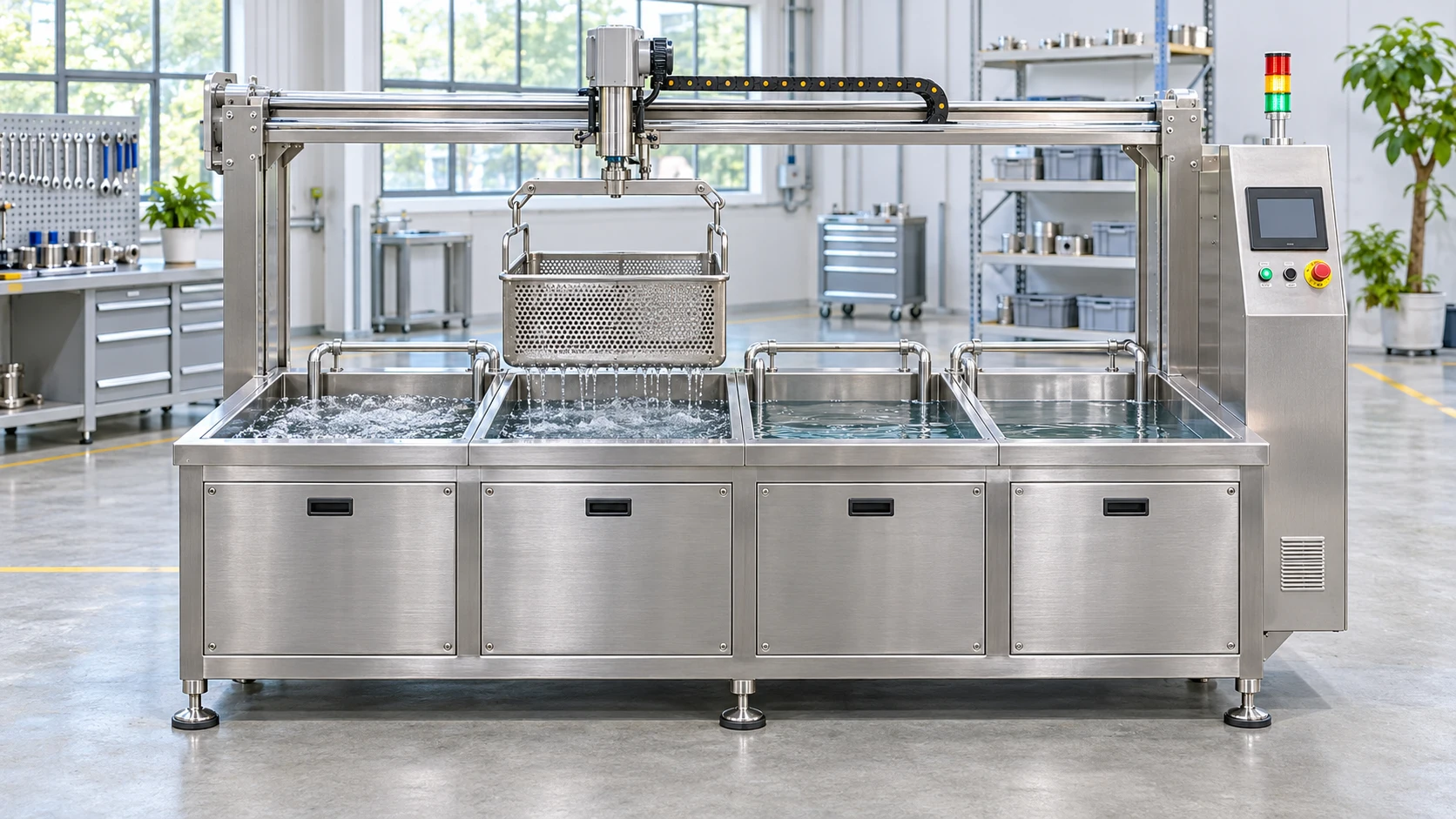
Industrial ultrasonic cleaning systems
Plan ultrasonic immersion, rinsing and drying around your part geometry, basket loads and drainage needs. Define the finished condition before a sample trial.

Your parts set
the direction.
Explore inspection and cleaning applications for shafts, rings, gears and irregular machined components.
A process that works
as a whole.
Explore the steps from component loading through inspection or cleaning to the next production operation.
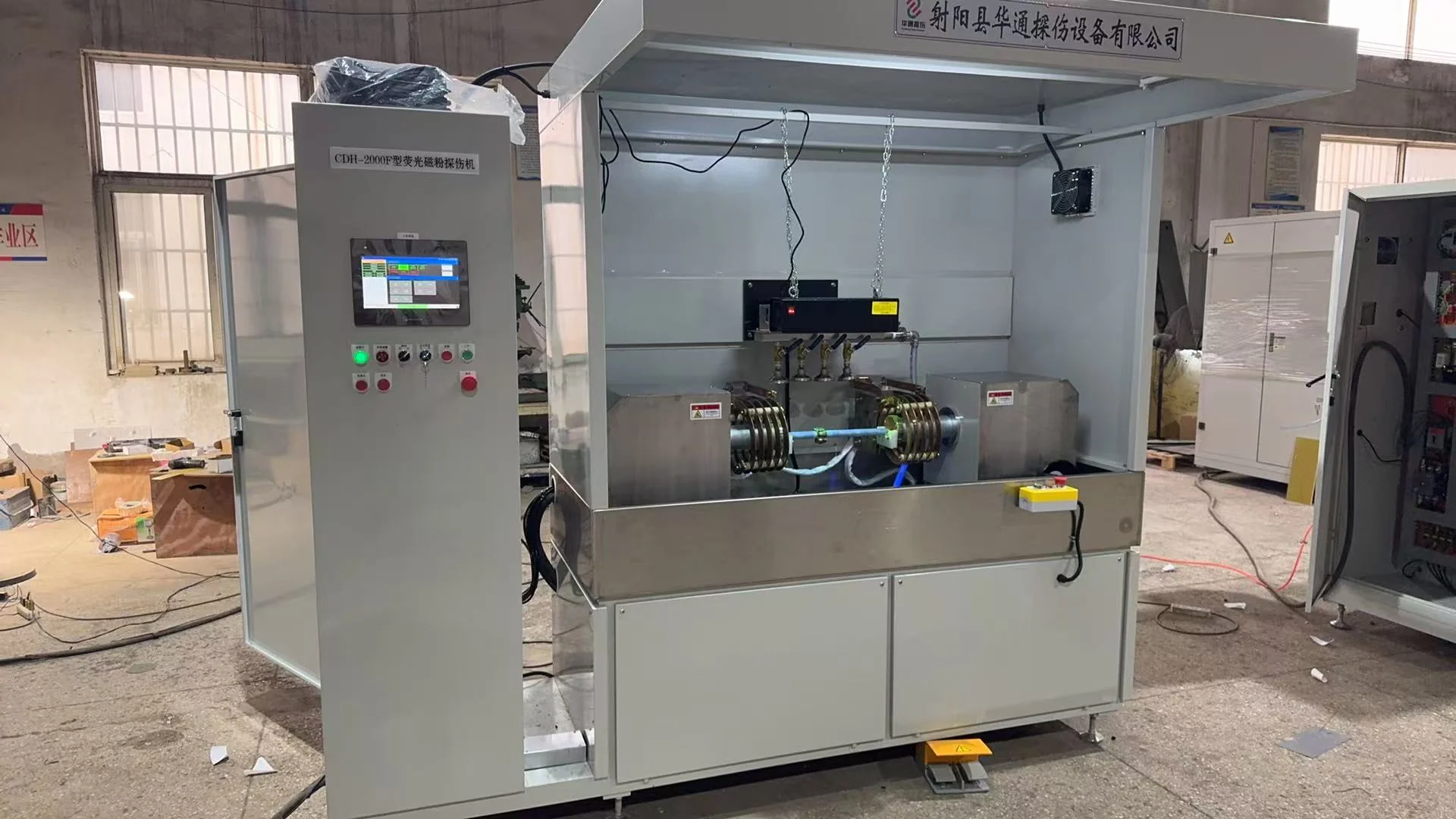
- 01Load & clamp
- 02Magnetize
- 03Apply particles
- 04Present component
- 05Operator examination
The sequence combines workpiece handling, magnetization and operator inspection of fluorescent indications.
Explore the configurationBuilt around
your components.


See the workflow
take shape.
Watch component loading, positioning, magnetization and operator inspection through the equipment sequence.
Explore automated MPI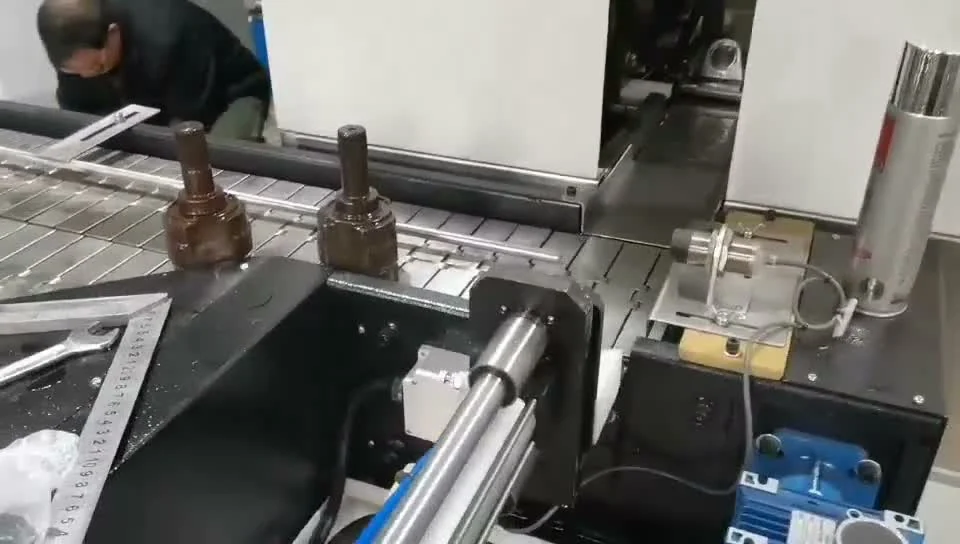
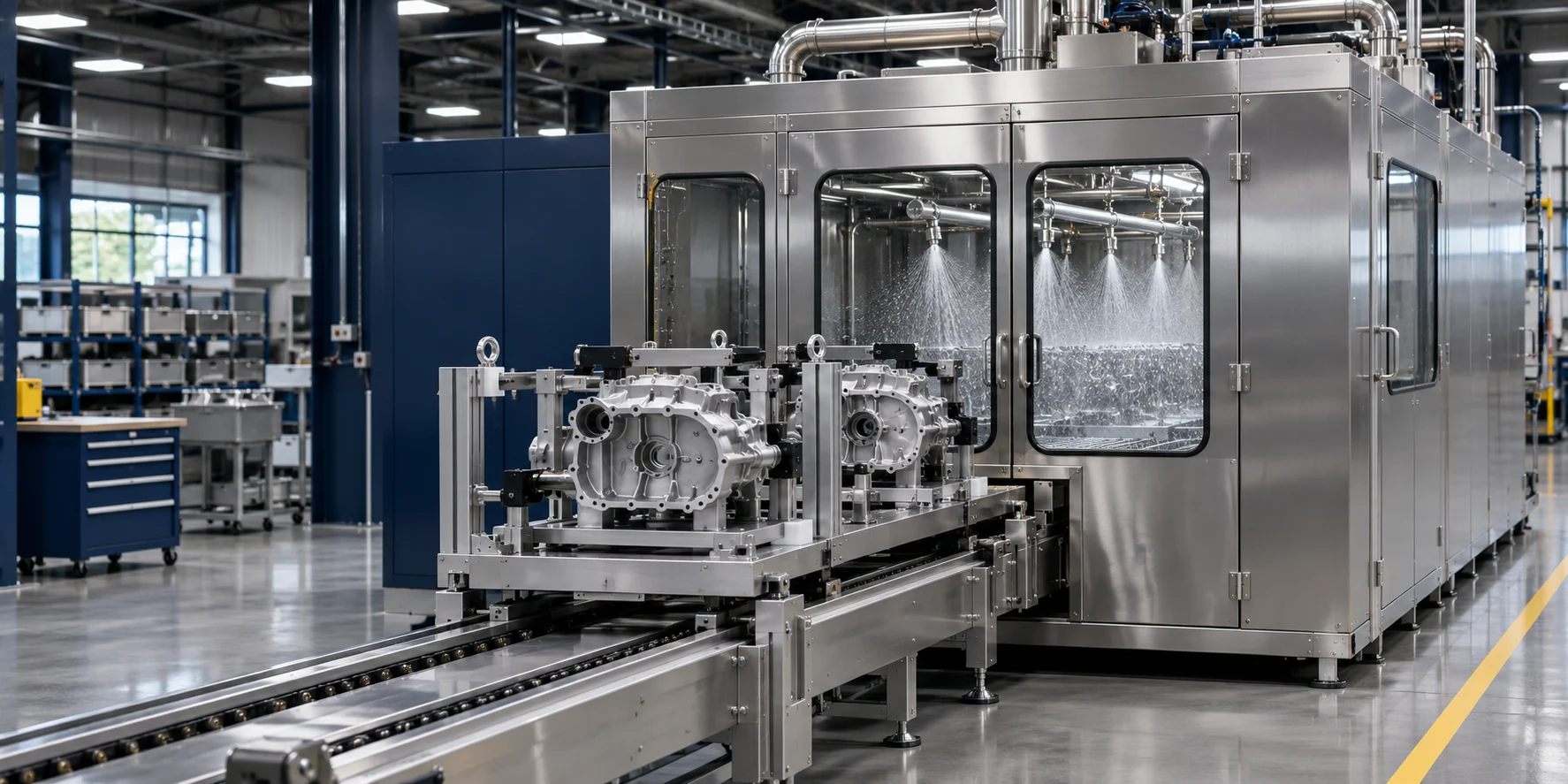
Connect equipment
with your production line.
Workpiece fixtures, loading height and control signals connect the equipment to adjacent stations. Plan service connections and maintenance access within your production layout.
- 01Part presentation & fixture requirements
- 02Manual or mechanical loading
- 03Line height, control handshakes & site conditions
- 04Maintenance access & site connections
Know the next step.
From component requirements and sample testing to equipment delivery and commissioning.
Explore the project process- 01
Enquire
Share your component drawings and production requirements.
- 02

Select
Explore the process, fixtures and loading options.
- 03

Specify
Agree the equipment specification and project terms.
- 04

Test
Evaluate equipment with the agreed components and checks.
- 05

Commission
Prepare delivery, site connections and installation.
Better questions.
Clearer decisions.
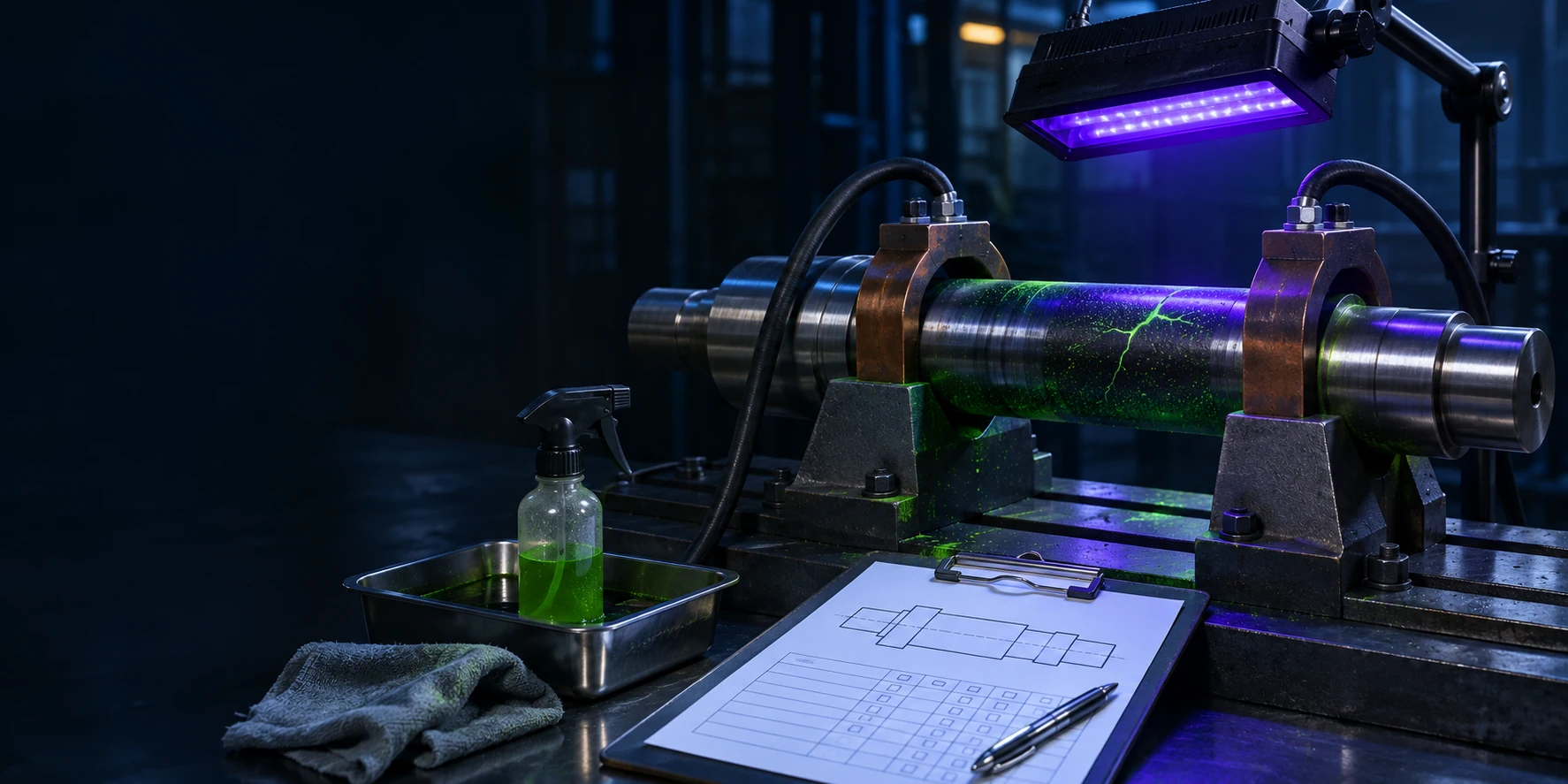
How to specify magnetic particle inspection equipment
Prepare an MPI equipment specification with material, workpiece drawings, inspection areas, magnetization, handling and operator examination requirements.
Read the guide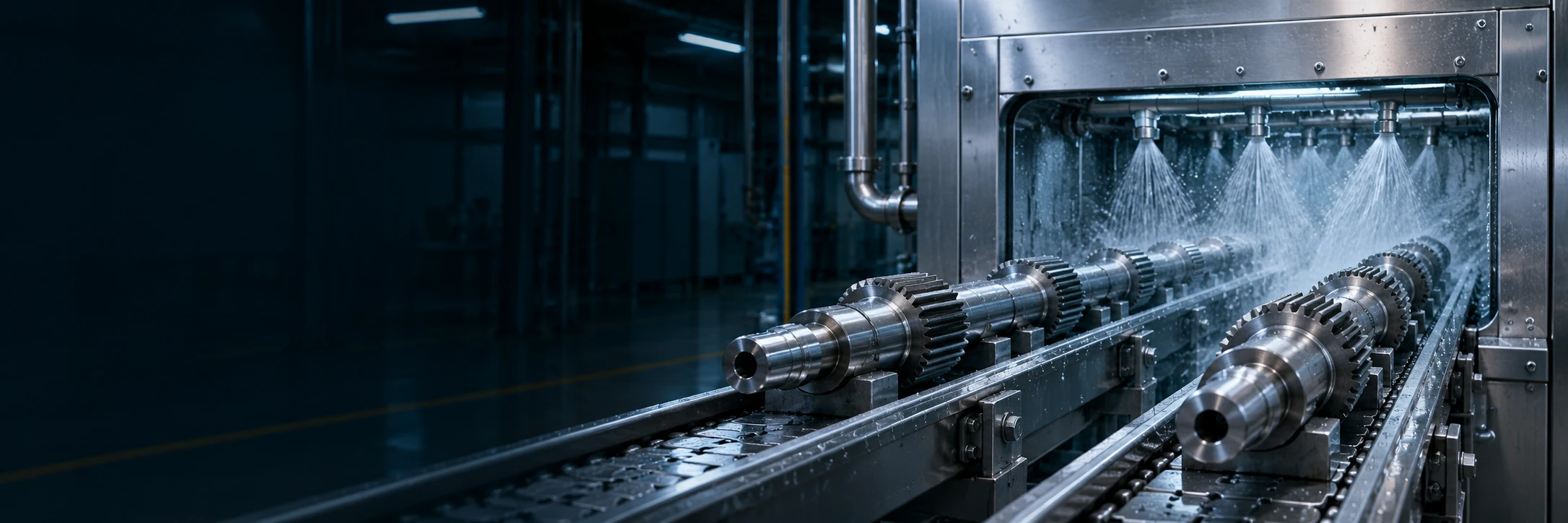
Planning a conveyor parts washing process
Plan conveyor parts washing from the incoming condition to drying and discharge. Define loading pitch, treatment time and required output separately.
Read the guide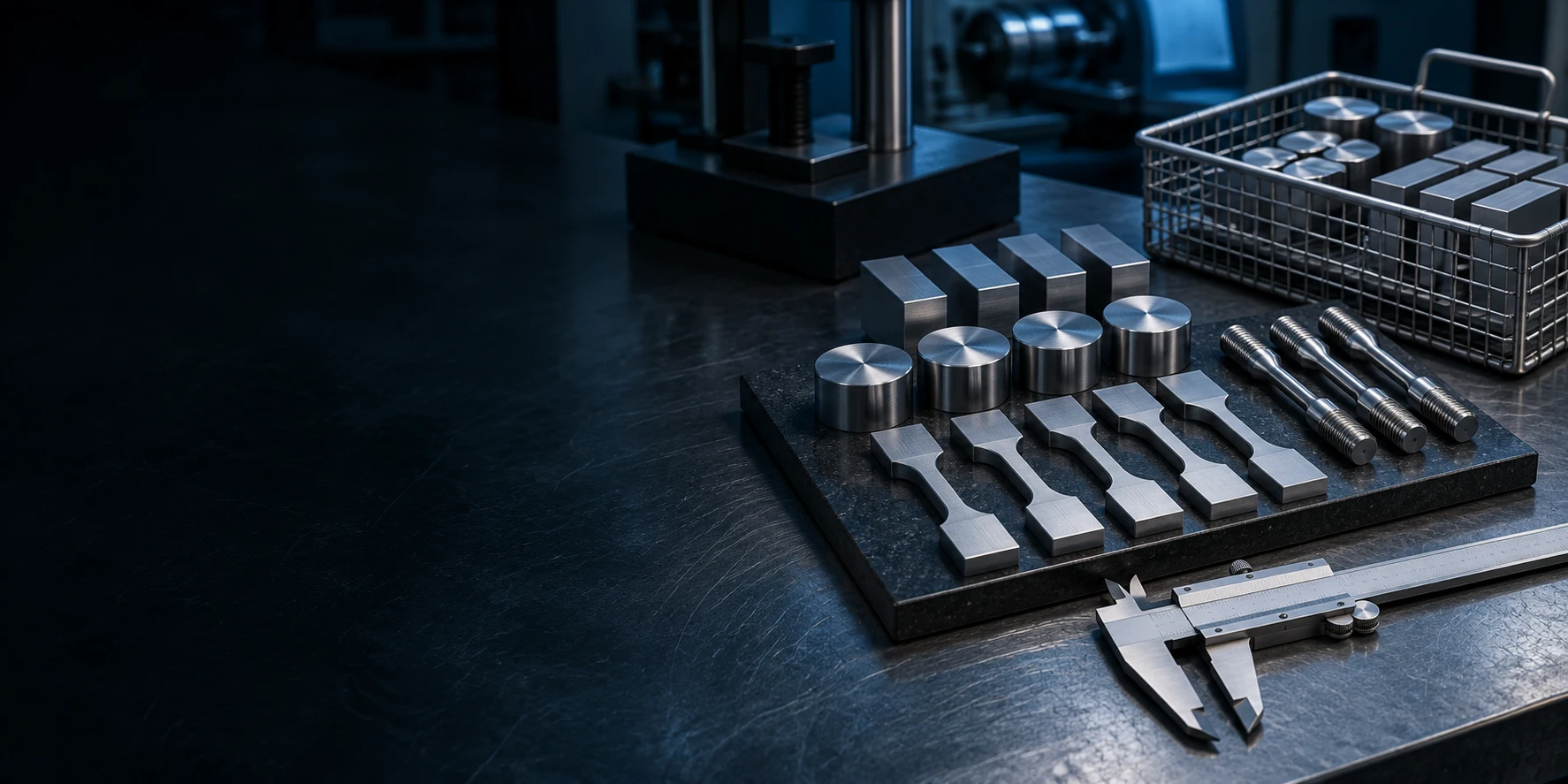
Preparing parts for equipment trials
Choose representative parts and record their incoming condition. Prepare drawings, sample identifiers and acceptance checks before an equipment trial.
Read the guideYour equipment
questions, answered.
Learn about material suitability, workpiece loading and the inspection or cleaning sequence.
Which materials are suitable for magnetic particle inspection?
Magnetic particle inspection is used for ferromagnetic components, including suitable steel and iron parts. Aluminium, copper and other non-ferromagnetic materials require a different inspection method.
Include the material grade and manufacturing condition with your enquiry.
How does operator inspection fit into automated MPI?
The equipment can coordinate loading, clamping, magnetization, particle application and transfer. An operator examines the fluorescent indications and determines the result using the inspection procedure.
Production output includes the time for workpiece handling and operator inspection.
How are the cleaning stages selected?
Washing, rinsing, air blow-off and drying are selected for the incoming contamination and required finished part condition. Geometry, cleaning-liquid compatibility and the next production operation also influence the sequence.
Include any specified surface cleanliness and dryness requirements.
How much loading space does a part need?
Loading space includes the component, its supports or fixture, and the clearance required for treatment and transport. Belt width, usable loading width and the process opening are considered separately.
Show the part in its intended loading orientation, including spacing between components.
What is the difference between output interval and treatment time?
Output interval is the time between finished parts leaving the machine. Treatment time is how long one component stays in a washing or drying zone. Several components can move through different zones at the same time.
Part spacing, conveyor speed and zone length connect output with treatment time.
What should an enquiry for custom cleaning equipment include?
Include the part range, material, incoming contamination, required finish, output and loading preference. Add the available floor space, site services and connections to adjacent equipment.
Drawings and representative samples help develop the equipment proposal.
How should sample parts be prepared?
Label each component to match its drawing and include the material and manufacturing condition. For cleaning trials, preserve the contamination normally found in production and describe any special handling requirements.
Contact us about the sample quantity, packing and return arrangements before shipment.
Can I enquire before the specification is complete?
Yes. Start with the component, process task and required output. Drawings, sample parts and a review of the equipment options can help develop the specification.
You can add further technical details as the project progresses.