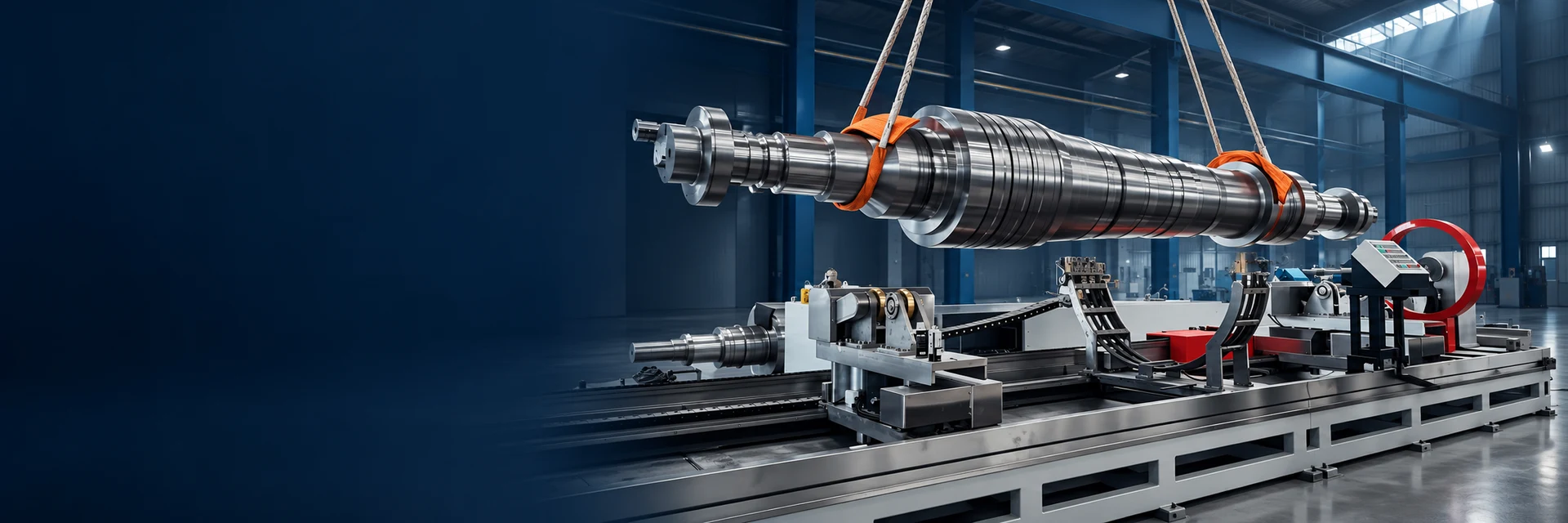
Magnetic particle inspection for shafts
Specify shaft inspection around length, diameter, shoulders, fixture contact and access to the inspection surfaces on ferromagnetic parts.
Explore the application
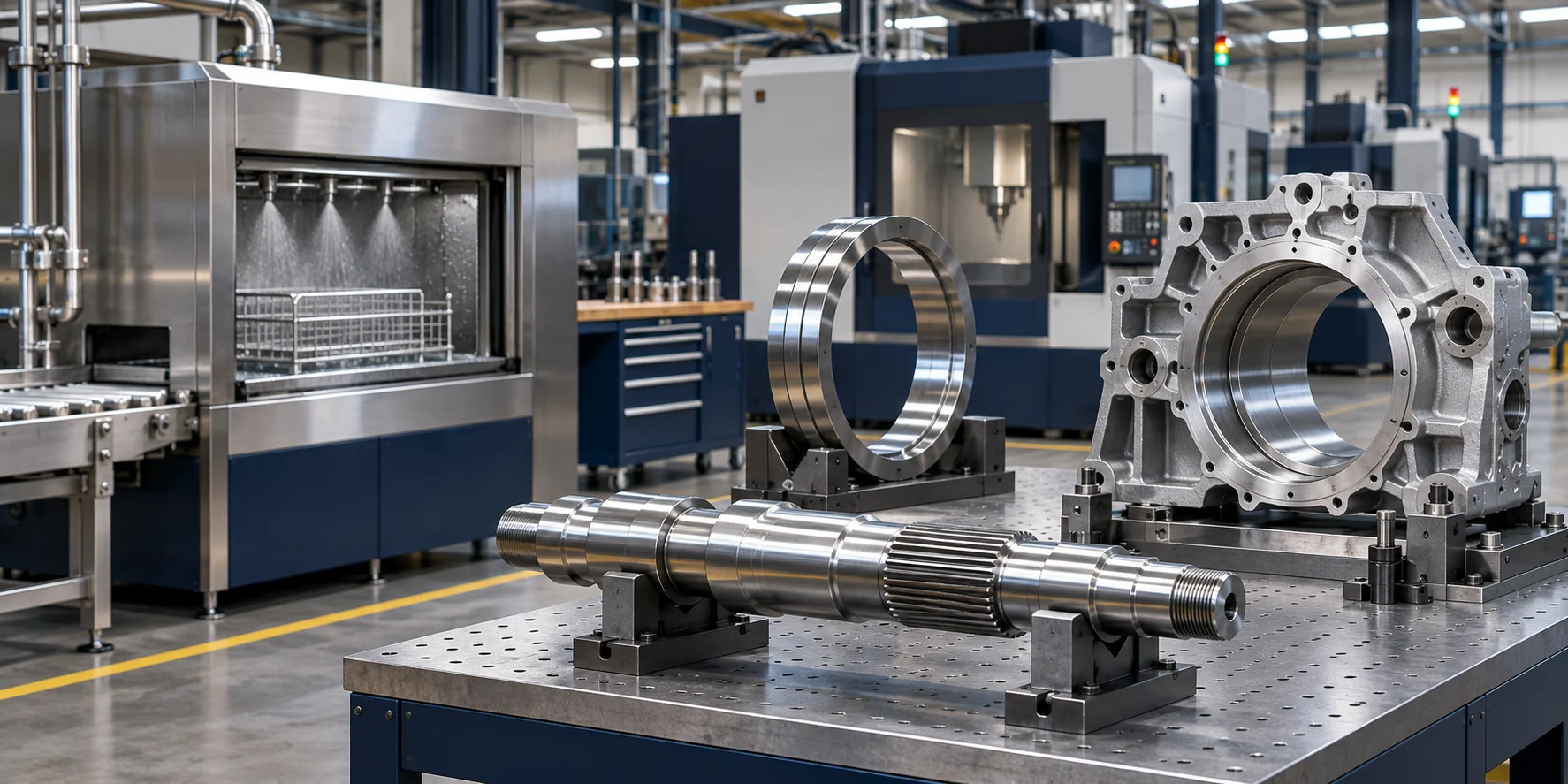
Magnetic particle inspection of ring components
Evaluate fluorescent magnetic particle inspection for ferromagnetic rings. Use bore, outer diameter and inspection surfaces to plan handling and magnetization.
Explore the application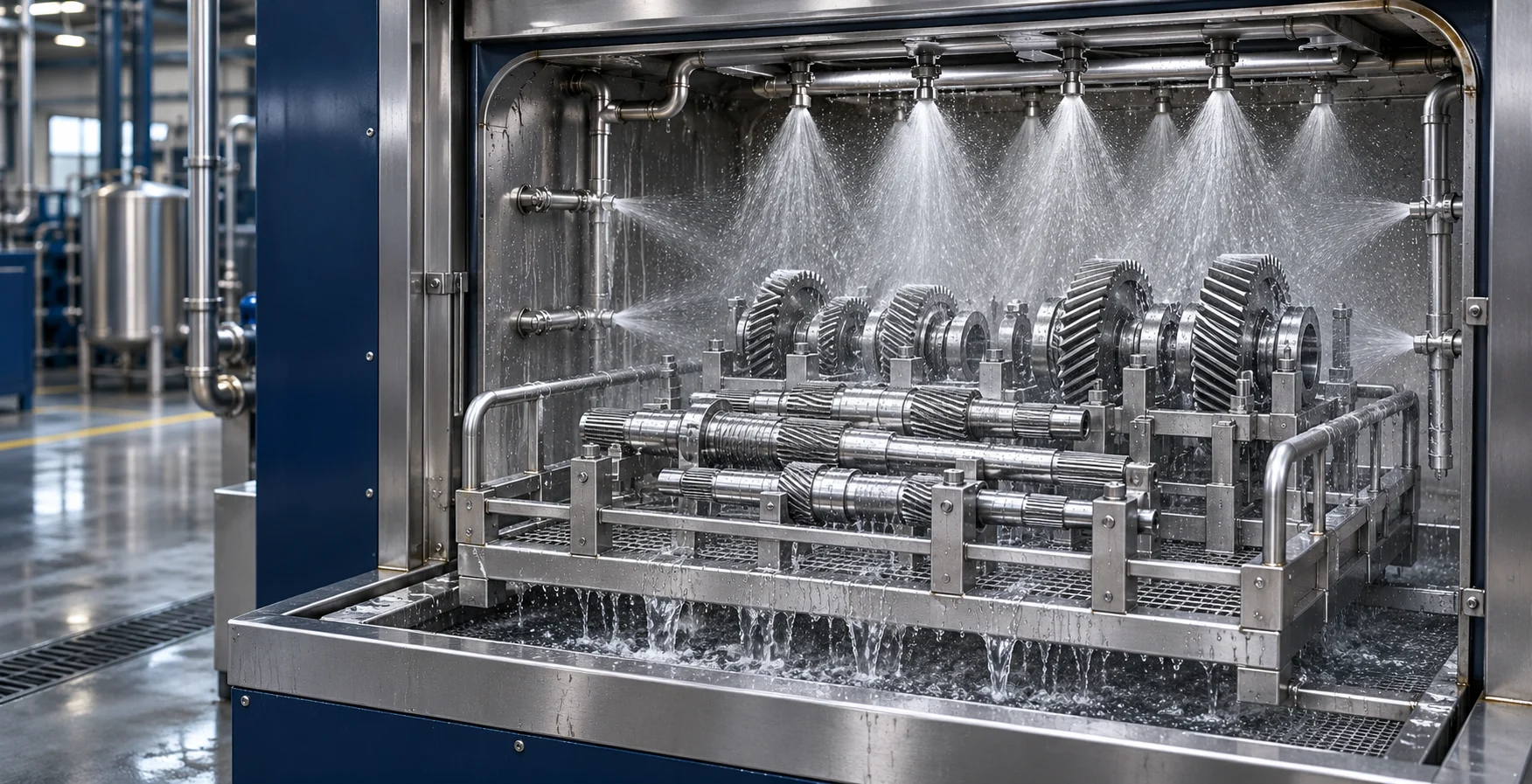
Automotive parts cleaning systems
Plan cleaning for automotive shafts, gears and machined parts between manufacturing steps. Define incoming oil and chips, cleanliness targets and dryness.
Explore the application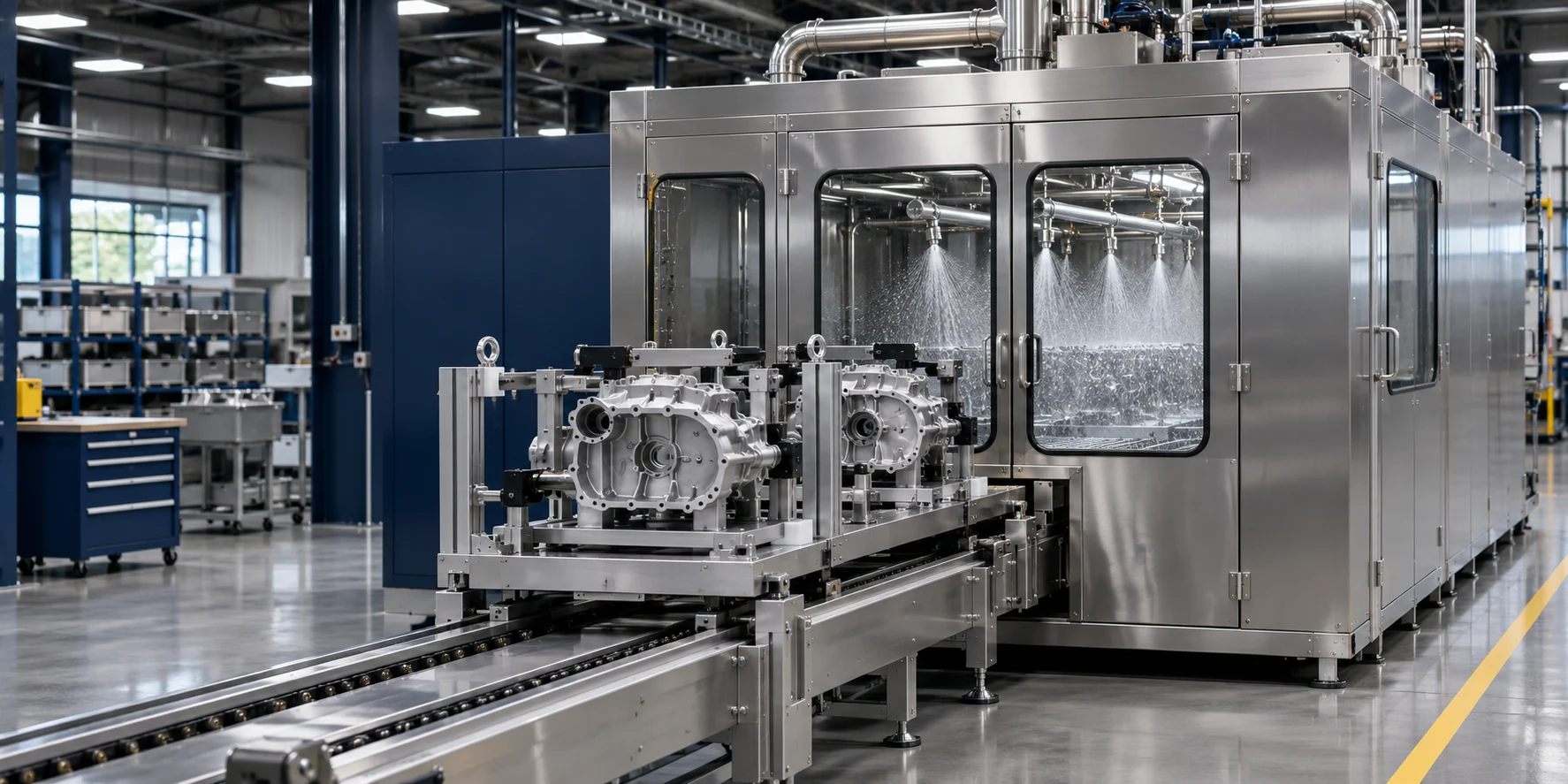
Custom parts cleaning systems
Specify a custom parts cleaning system for irregular workpieces, restricted contact surfaces or line constraints. Start with drawings and the required finished condition.
Explore the application
Find equipment for your parts.
Explore component inspection and cleaning applications, from shaft handling and ring magnetization to washing and drying machined parts. Each application connects the workpiece with suitable equipment and process options.
Your equipment
questions, answered.
Find answers about materials, part handling and inspection or cleaning processes.

Which materials are suitable for magnetic particle inspection?
Magnetic particle inspection is used for ferromagnetic components, including suitable steel and iron parts. Aluminium, copper and other non-ferromagnetic materials require a different inspection method.
Include the material grade and manufacturing condition with your enquiry.
Can the equipment use manual or mechanical loading?
Manual loading, mechanical handling and production-line connections can be considered for the component and required output. Part orientation, fixtures and transfer height guide the loading arrangement.
Include the incoming and outgoing part flow with your line layout.
What information is needed for demagnetization?
Include the residual-field limit, units, measurement method and measurement points. Component material, previous magnetization and the next operation help select the process and handling.
For a new part family, representative components help evaluate the demagnetization process.
How are the cleaning stages selected?
Washing, rinsing, air blow-off and drying are selected for the incoming contamination and required finished part condition. Geometry, cleaning-liquid compatibility and the next production operation also influence the sequence.
Include any specified surface cleanliness and dryness requirements.
How are baskets and fixtures selected?
Part orientation, loading density and contact points guide basket and fixture selection. Space around the surfaces helps cleaning-liquid access, while the loading arrangement supports air release and drainage.
Include the part quantity per load and any restrictions on surface contact.
What drawings are useful for shaft inspection?
Include shaft length, diameter changes, shoulders, end features, weight and inspection areas. Add the material grade, manufacturing condition and intended loading direction.
Drawings for the full shaft range help plan fixtures and changeover.
Can one system inspect several ring sizes?
A shared arrangement can be considered across the complete ring range. Inner and outer diameters, thickness, weight and inspection surfaces guide fixtures, magnetization and operator access.
Provide the smallest and largest ring drawings, along with any section changes.
What should an enquiry for custom cleaning equipment include?
Include the part range, material, incoming contamination, required finish, output and loading preference. Add the available floor space, site services and connections to adjacent equipment.
Drawings and representative samples help develop the equipment proposal.
Connect the details.
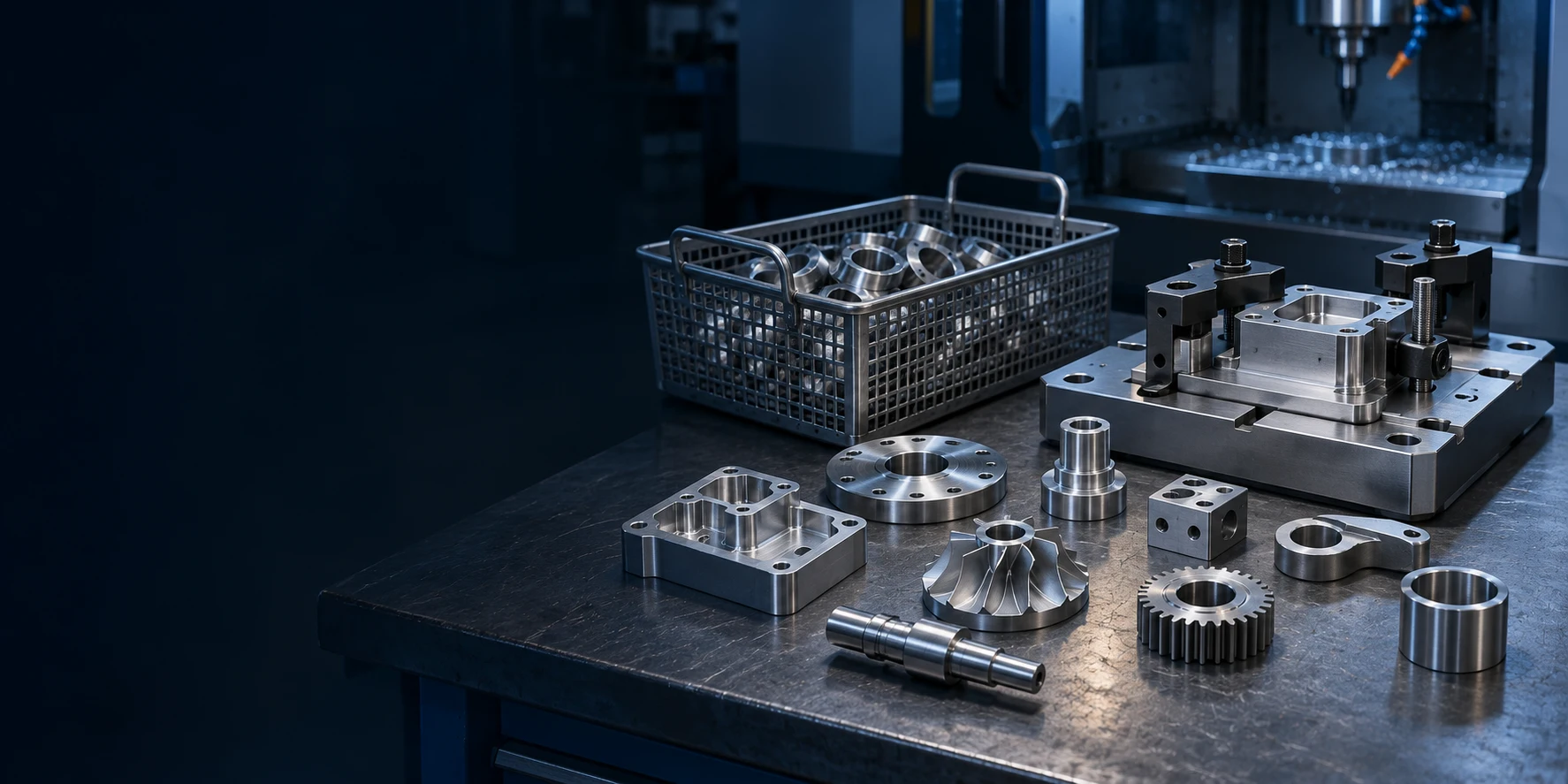
Find equipment for your application.
Choose your task and workpiece material to explore a suitable equipment family, then use the result to prepare your project requirements.
Explore the application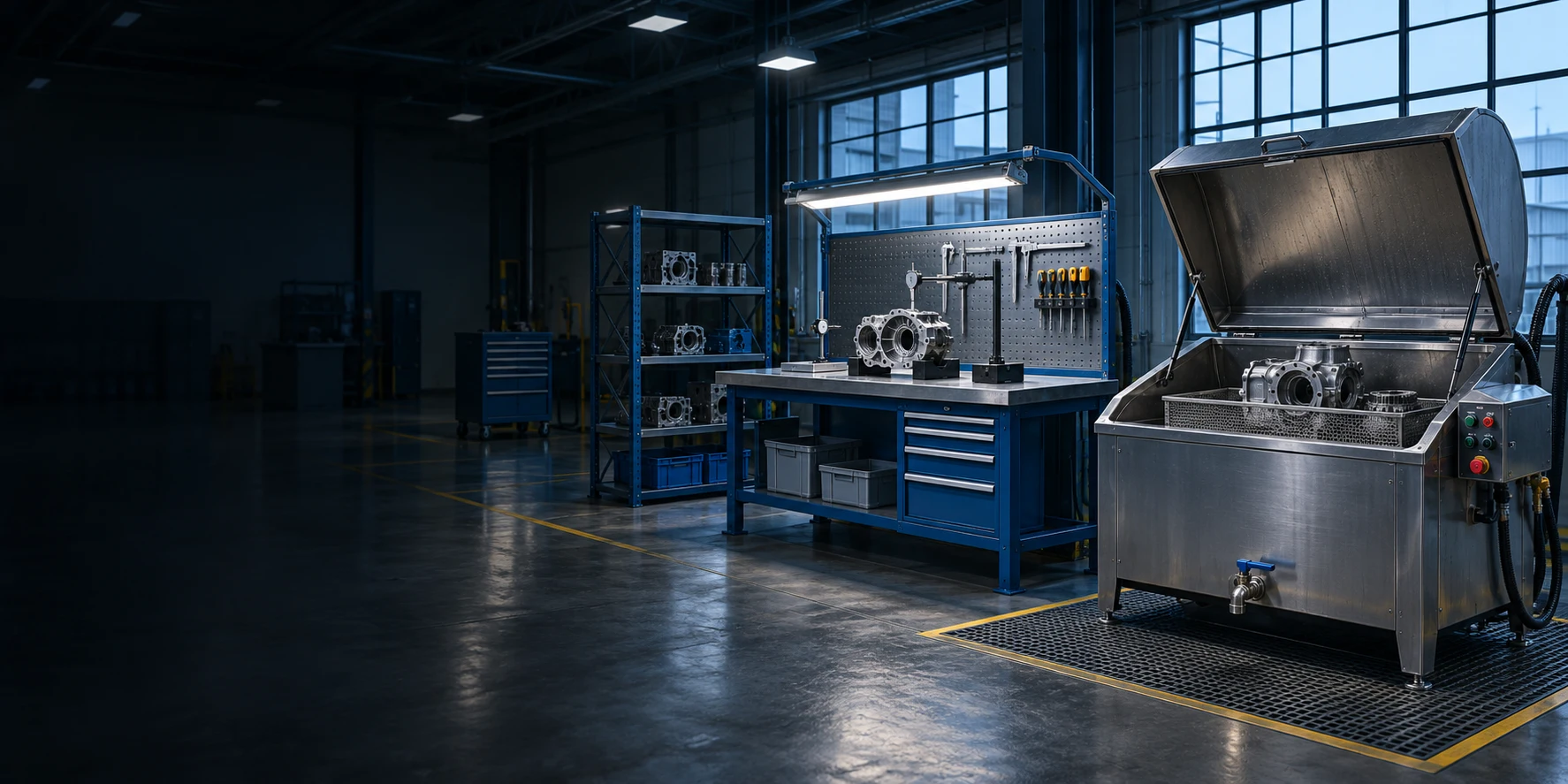
Inspection & cleaning equipment.
Compare four equipment families for magnetic particle inspection, demagnetization, spray washing and ultrasonic cleaning, with links to related configurations.
Explore the application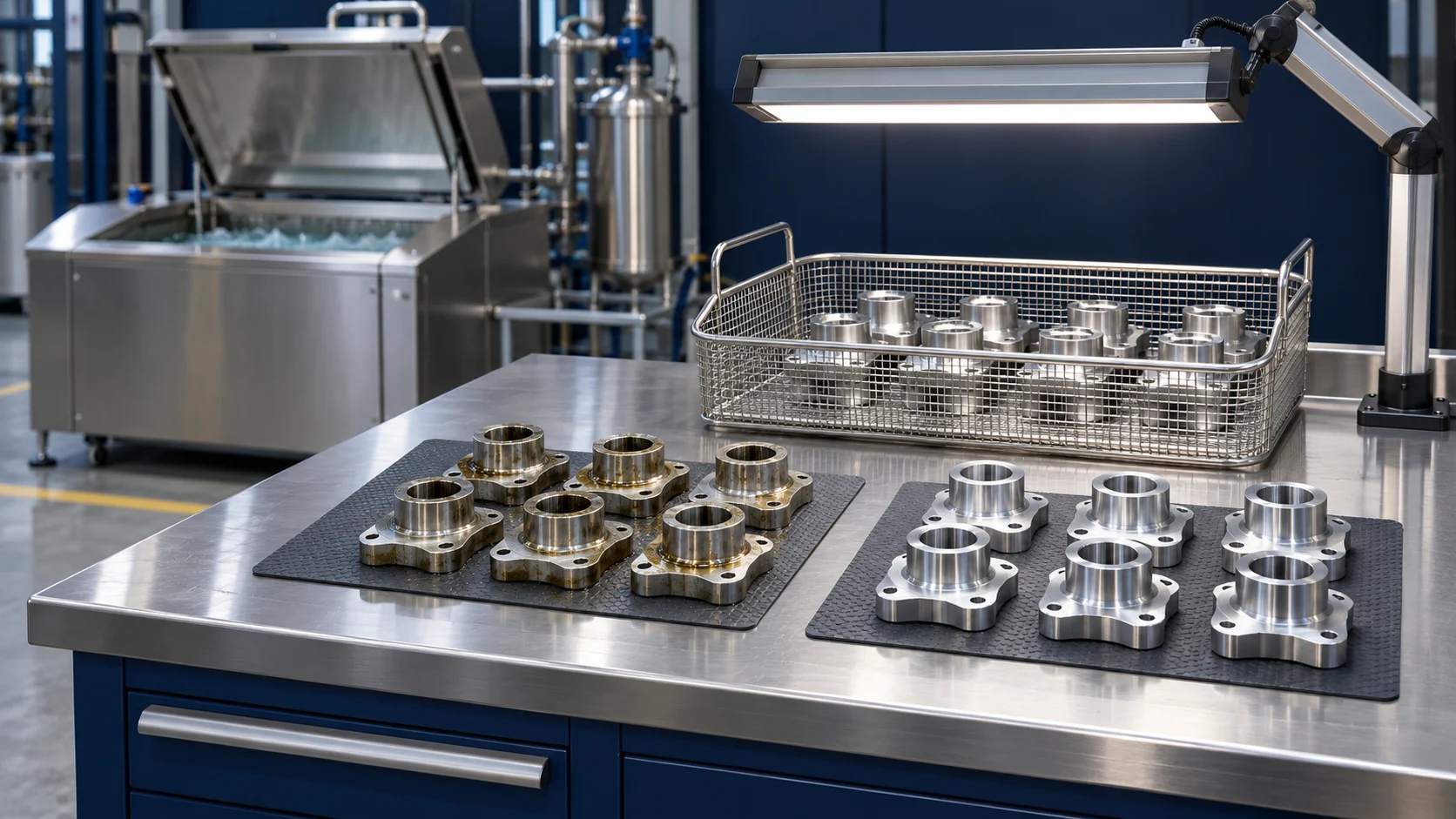
Sample testing for your parts.
Prepare representative components for a cleaning or magnetic particle inspection trial. Define incoming condition, test procedure and acceptance before comparing results.
Explore the application