Applications & workpieces.
Explore the workpiece materials, shapes and production tasks suited to this equipment.

- Components with defined cleaning and drying requirements
- Materials compatible with the selected cleaning liquid
- Basket or fixture loading
- Multistage cleaning, rinsing and drying
How the process works.

- 01Ultrasonic clean
- 02Ultrasonic rinse
- 03Spray clean
- 04Air blow-off
- 05Hot-air dry
Process stages.
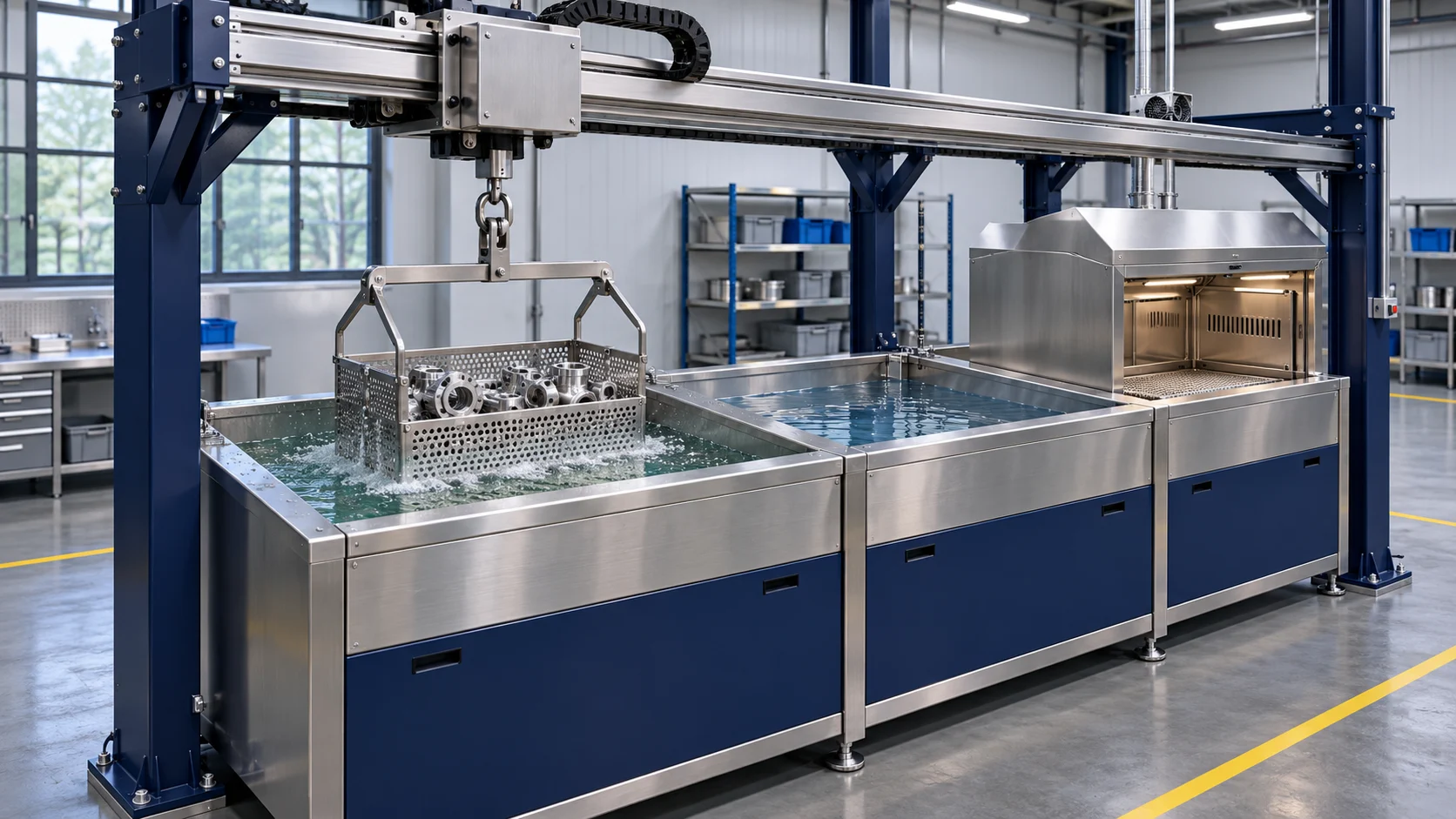
Multistage cleaning: component baskets move through cleaning, rinsing and drying.

Equipment options.
Explore workpiece fixtures, process stages and handling options for your components.

| Equipment feature | Available arrangements | Your application |
|---|---|---|
| Material & cleaning liquid | Cleaning chemistry matched to the component | Material compatibility and incoming contamination |
| Baskets & fixtures | Workpiece loading and orientation | Contact points, loading density and drainage |
| Process stages | Ultrasonic cleaning, rinsing and drying | Required surface condition and next operation |
| Transfer & maintenance | Movement between stages and liquid circulation | Carryover, site services and maintenance access |
Component baskets or fixtures move between cleaning, rinsing and drying stages.
Cleaning, rinsing and drying in one process.
Ultrasonic cleaning works alongside rinsing, transfer and drying. The sequence treats incoming contamination, removes liquid residues and prepares components for the next operation.

Loading for surface access and drainage.
Basket loading and fixtures affect how cleaning liquid reaches the part. Workpiece orientation, contact points and spacing also help release trapped air and drain retained liquid.

Sample testing for your components.
Representative parts help assess surface appearance, dryness and specified particulate cleanliness. The evaluation method is selected for the required finished condition.
Specify the basket load and drainage conditions
Show where liquid needs to reach and where air or liquid may be trapped. Use representative loads to agree basket orientation, rinsing, drying and the acceptance method.
- Basket loading and maximum part envelope
- Cavities, contact restrictions and material compatibility
- Required cleanliness and dryness after the last stage
- Material, part geometry and representative contamination
- Required finished condition and evaluation method
- Basket or fixture arrangement
- Transfer, liquid management and site conditions
Your equipment
questions, answered.
Find answers about materials, part handling and inspection or cleaning processes.

How are the cleaning stages selected?
Washing, rinsing, air blow-off and drying are selected for the incoming contamination and required finished part condition. Geometry, cleaning-liquid compatibility and the next production operation also influence the sequence.
Include any specified surface cleanliness and dryness requirements.
Which stages can accompany ultrasonic cleaning?
Ultrasonic cleaning can be combined with rinsing, additional cleaning stages, air blow-off and hot-air drying. Workpiece transfer and drainage connect the stages.
The sequence is selected for the material, contamination and required finish.
How are baskets and fixtures selected?
Part orientation, loading density and contact points guide basket and fixture selection. Space around the surfaces helps cleaning-liquid access, while the loading arrangement supports air release and drainage.
Include the part quantity per load and any restrictions on surface contact.
How is cleaning performance evaluated?
Surface appearance, dryness and particulate cleanliness are evaluated using the method specified for the component. Photographs show the surface appearance; particle requirements use the specified sampling and measurement method.
Include the required measurement and acceptance criteria in your enquiry.
What should an enquiry for custom cleaning equipment include?
Include the part range, material, incoming contamination, required finish, output and loading preference. Add the available floor space, site services and connections to adjacent equipment.
Drawings and representative samples help develop the equipment proposal.
How should sample parts be prepared?
Label each component to match its drawing and include the material and manufacturing condition. For cleaning trials, preserve the contamination normally found in production and describe any special handling requirements.
Contact us about the sample quantity, packing and return arrangements before shipment.
How does orientation affect multistage cleaning?
Orientation influences cleaning-liquid access, air release and drainage between stages. Baskets and fixtures are selected around the part geometry and the number of components per load.
Identify holes, cavities and contact restrictions on the drawing.
Can I view technical-cleanliness analysis documents?
Two technical-cleanliness analysis reports are available in the testing and documentation section. They include particle-size results, classifications and microscopy images.
Open the complete PDF to see the extraction and analysis information for each report.
Connect the details.
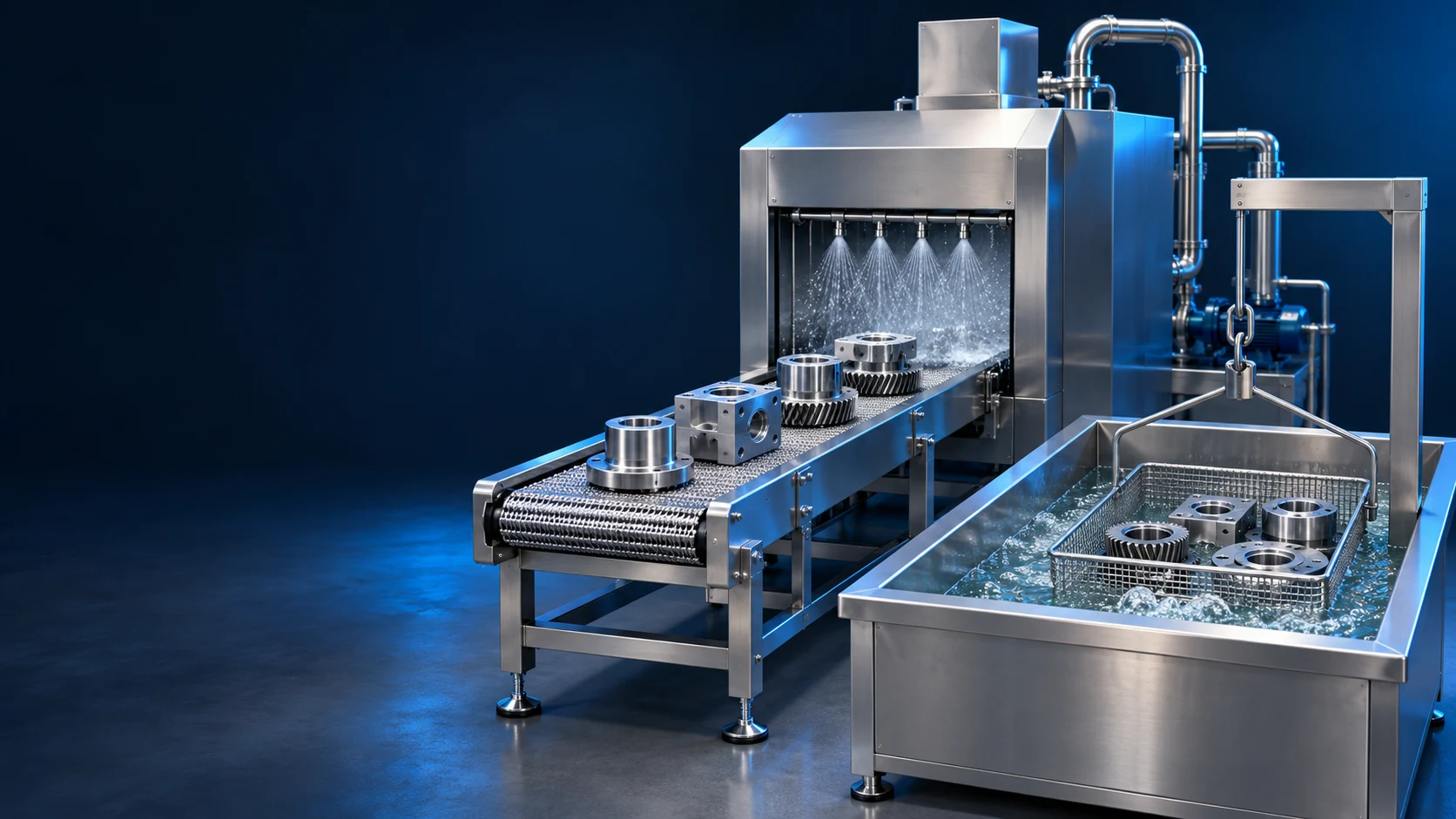
How to select an industrial parts washer
Compare spray and ultrasonic cleaning separately from conveyor and indexed handling. Use your part geometry, contamination, production load and required result.
Read the guide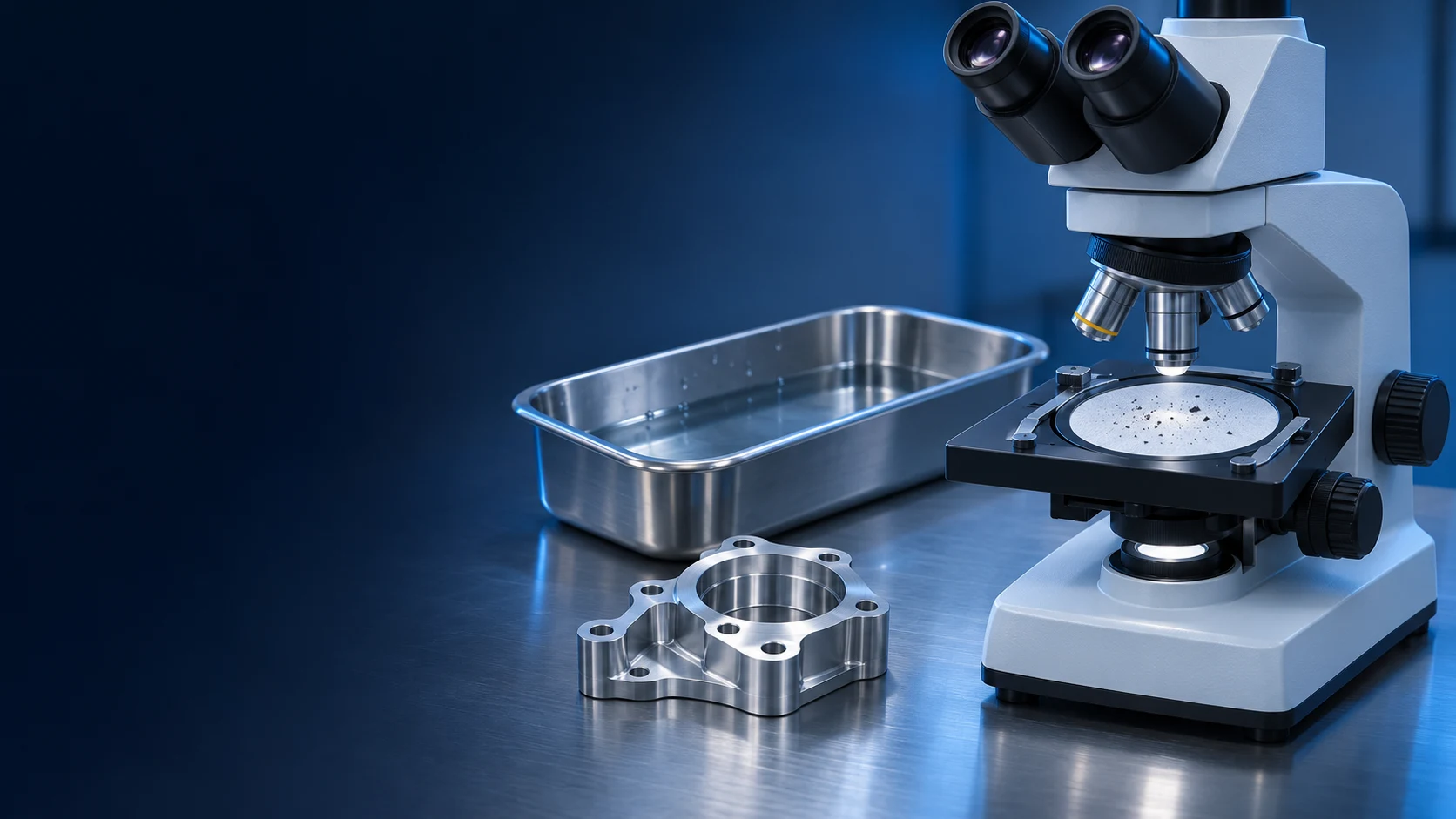
How to read a technical cleanliness report
Read extraction conditions, particle size classes and microscopy results with two example reports, then check the acceptance criteria for your component.
Read the guide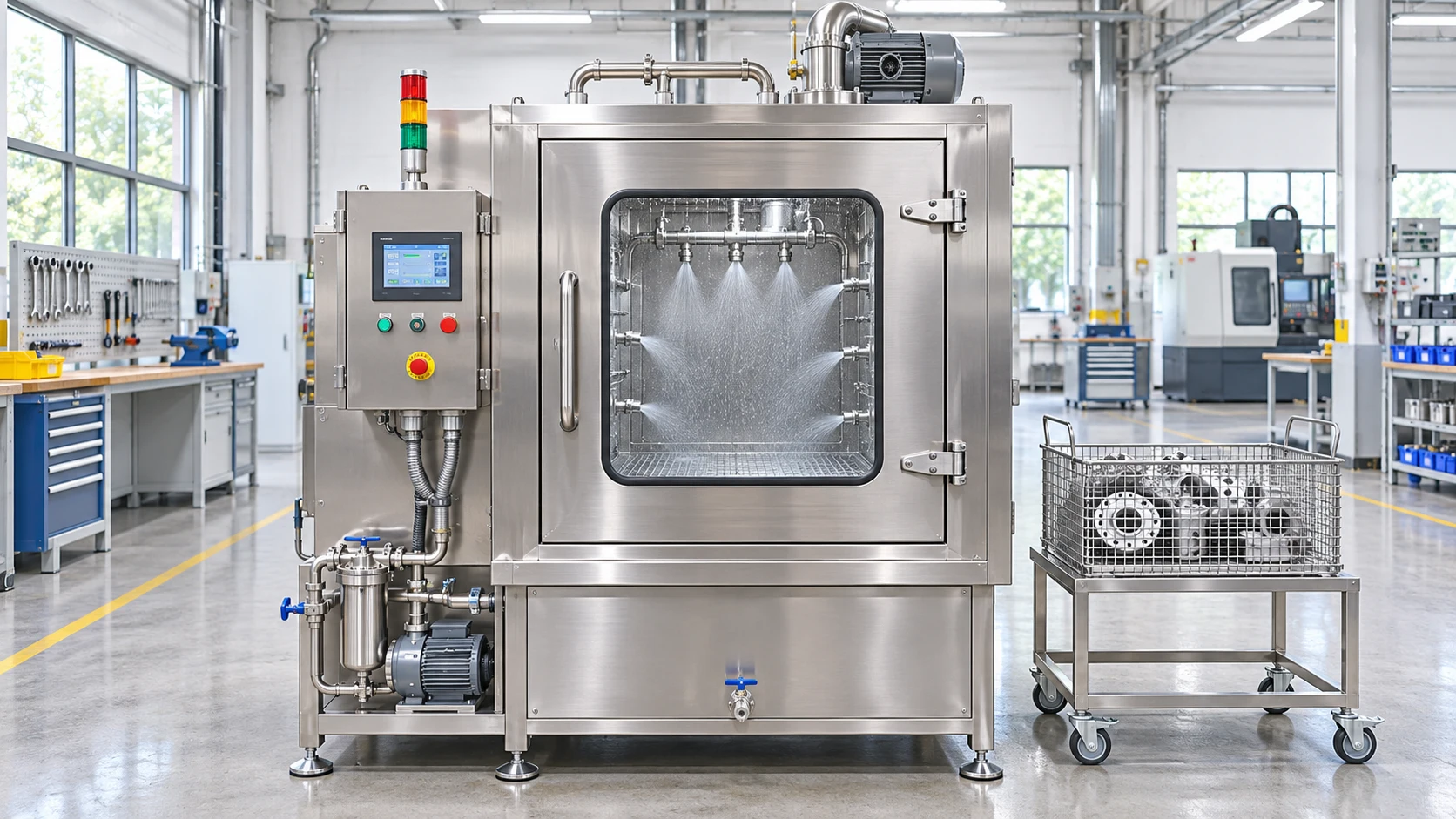
Industrial parts washers
Plan spray washing, rinsing, air blow-off and hot-air drying for machined parts. Compare handling options around contamination, part geometry and required output.
Explore the application