Read the sample and extraction conditions before reading the particle counts. A technical cleanliness report describes the material recovered and analysed under the stated test conditions. To decide whether a part passes, compare the result with the limits, units and measurement procedure agreed for that part.
Identify the sample and extraction conditions
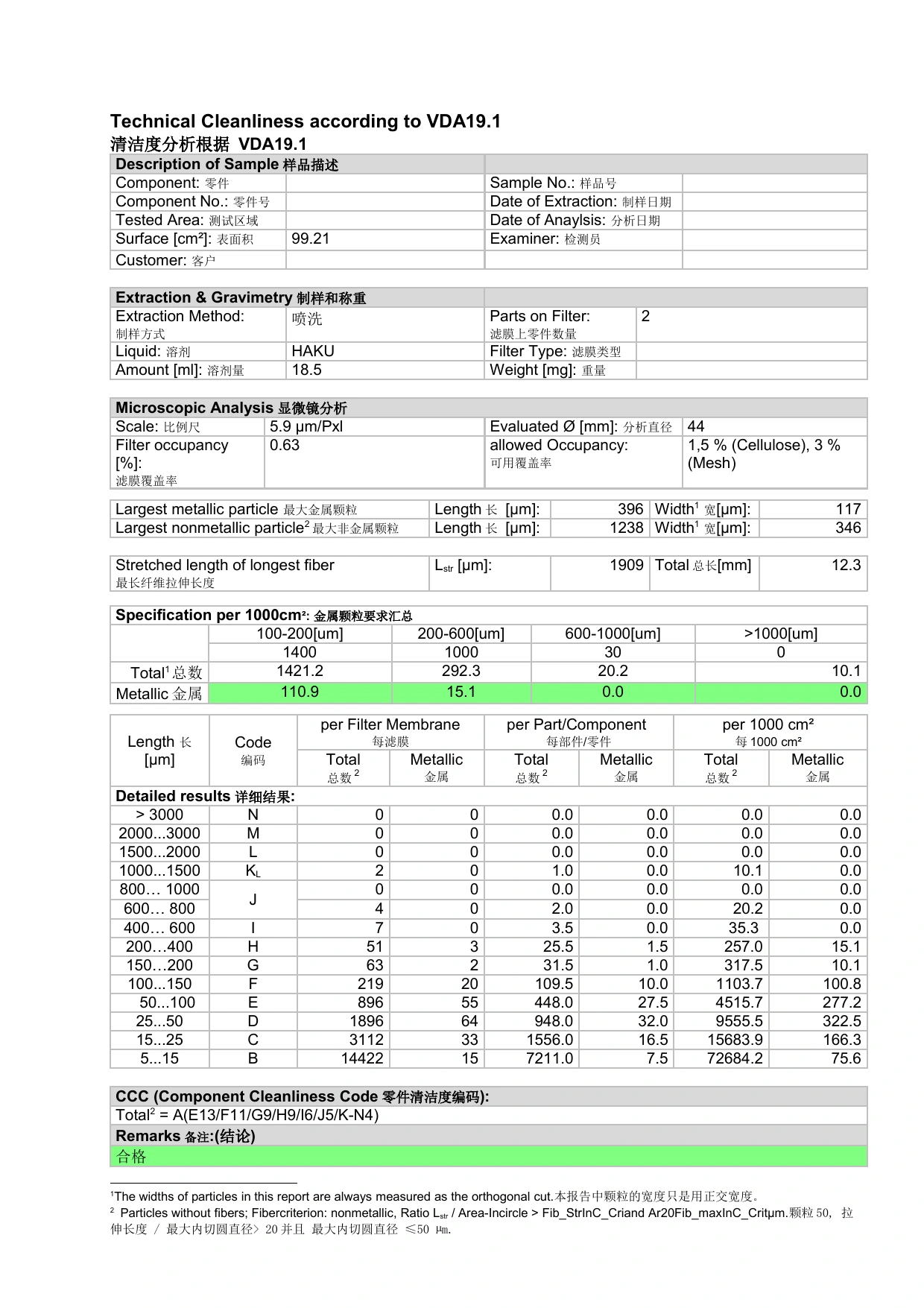
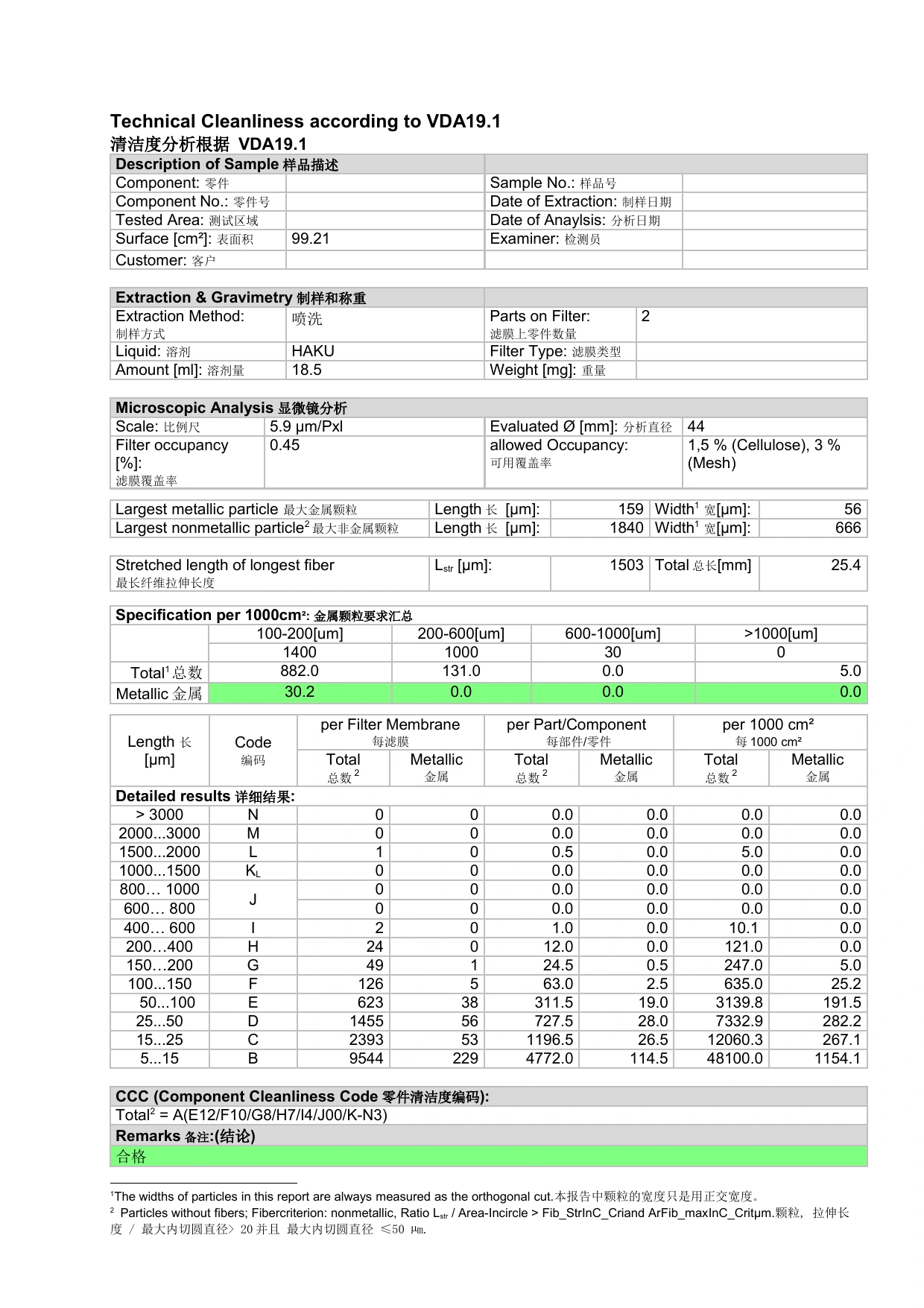
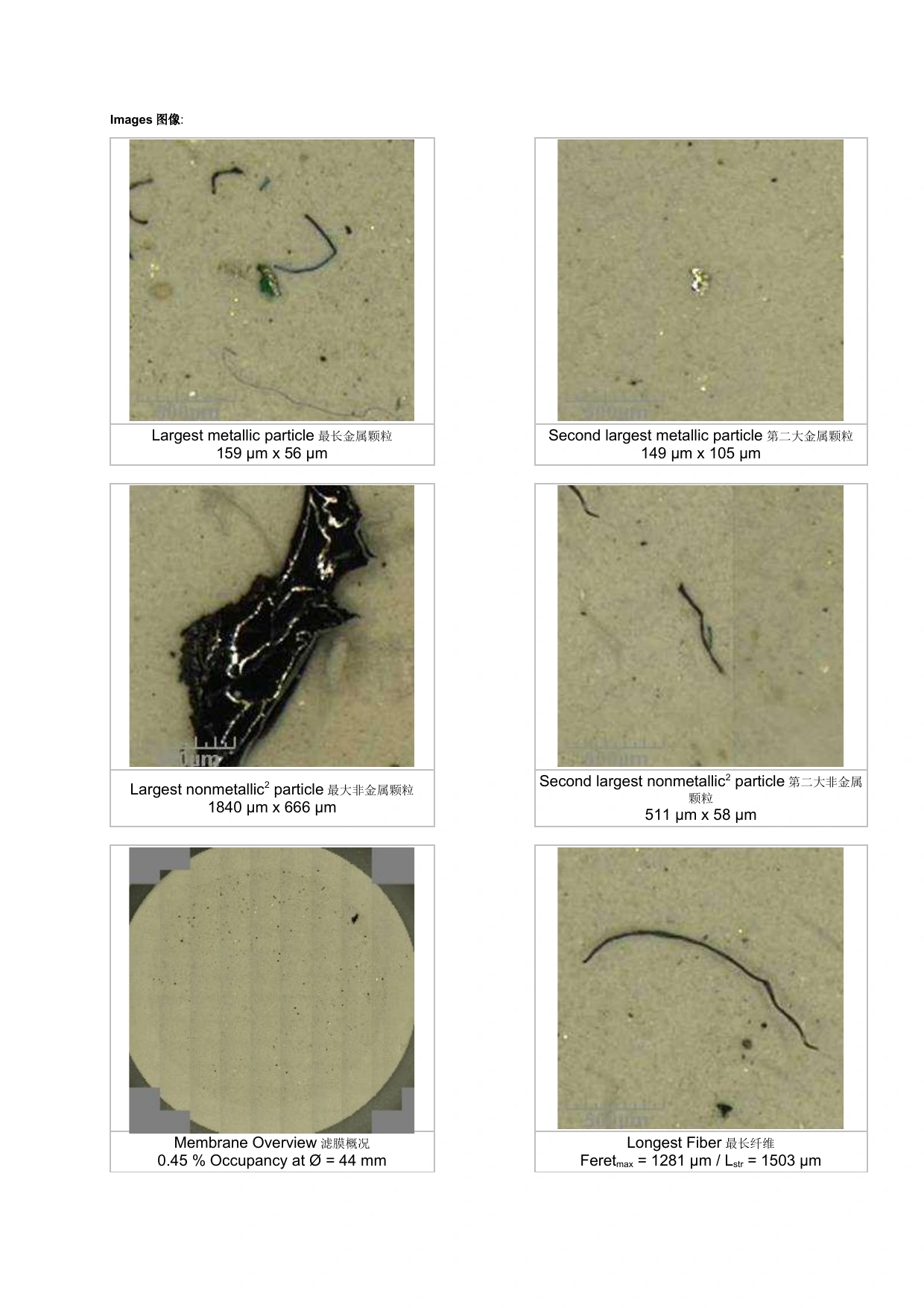
Start with the component identifier, sample quantity and surfaces included in the inspection. Then read the extraction method, relevant conditions and analysis method. In the two example reports below, particles recovered by spray extraction are collected on a filter membrane and examined microscopically.
Do not infer a sample identity or assume which machine processed the part when that information is absent. For a purchase trial, ask for sample identifiers that connect the report to the relevant workpieces, handling conditions and cleaning run.
Read the particle table and images together
| Report field | How to use it |
|---|---|
| Particle size classes | Read the class boundaries and units before comparing counts. A count in one size class does not describe all particle sizes. |
| Metallic and nonmetallic classifications | Read these separately when the acceptance criteria distinguish them. Check the report's classification method before drawing conclusions about material. |
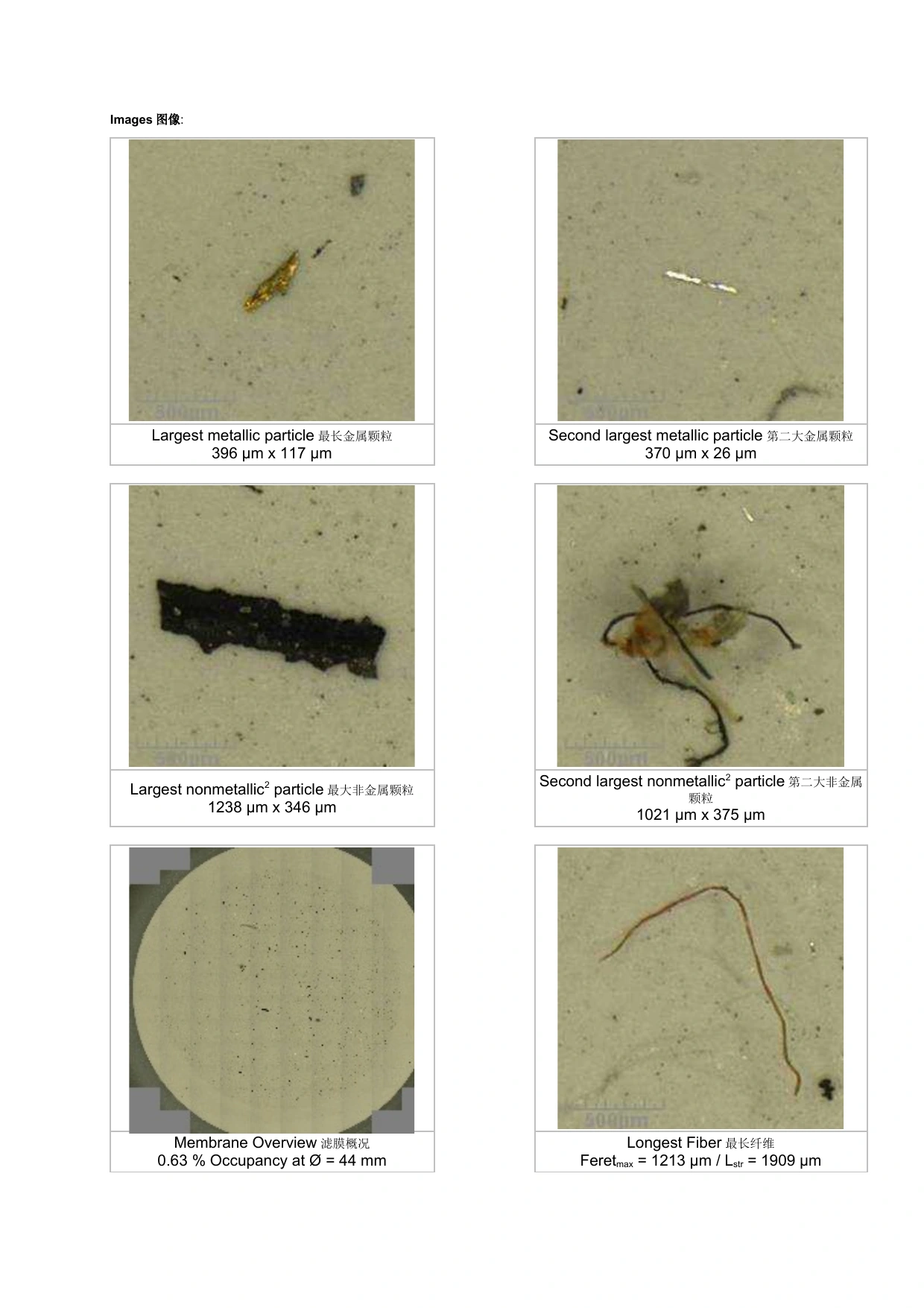
| Longest fibre and microscopy views | Use the reported measurements and images to understand the observed material. The membrane image is context for the analysis; it is not a substitute for the measured results. |
| Cleanliness code or reporting basis | Check how the result is expressed and what quantity or surface it represents before comparing it with a limit. |
Decide whether the evidence supports acceptance
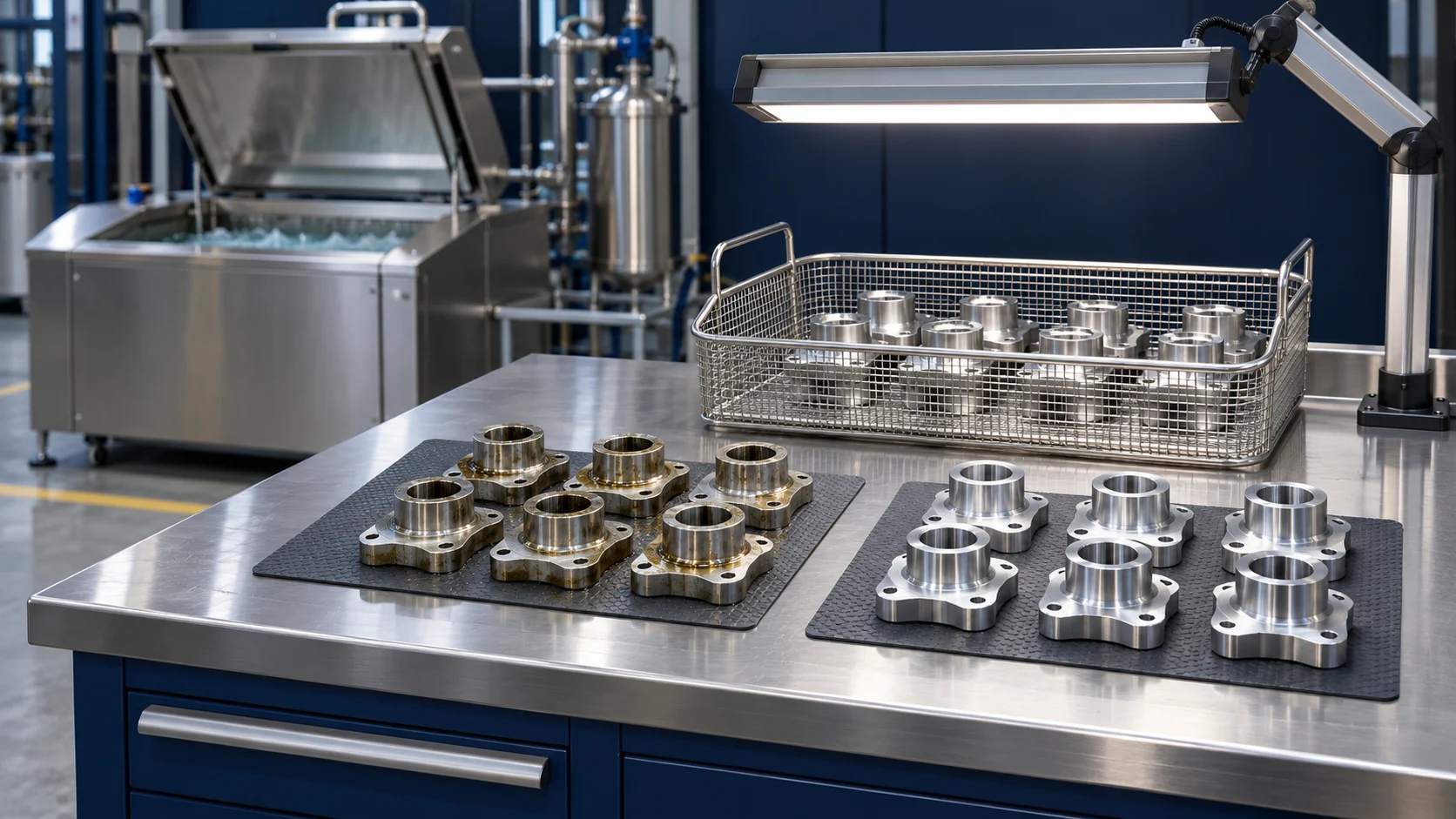
Use a controlled comparison: same defined surfaces, compatible sampling and extraction conditions, equivalent reporting basis, and traceable sample identities. Record the governing specification and which results are evaluated against which limits. Discuss any deviations before accepting the result.
The two PDFs below are independent examples. Their particle counts cannot establish a before-and-after improvement or predict the result for another part. If you need to qualify a production process, use the sample testing page to prepare your workpieces and acceptance criteria, then carry those criteria into the equipment acceptance plan.
Ready to explore equipment for your parts?
Bring your drawings, process requirements and production targets into your enquiry.
Organize your requirements