Choose the cleaning method and the handling arrangement separately. Spray and ultrasonic cleaning describe how parts are treated. Conveyor and indexing describe how parts move through the equipment. A useful specification starts with the part and the required result, then combines the two decisions.
Choose how to reach the contaminated surfaces

| Method | When to evaluate it | What to check on samples |
|---|---|---|
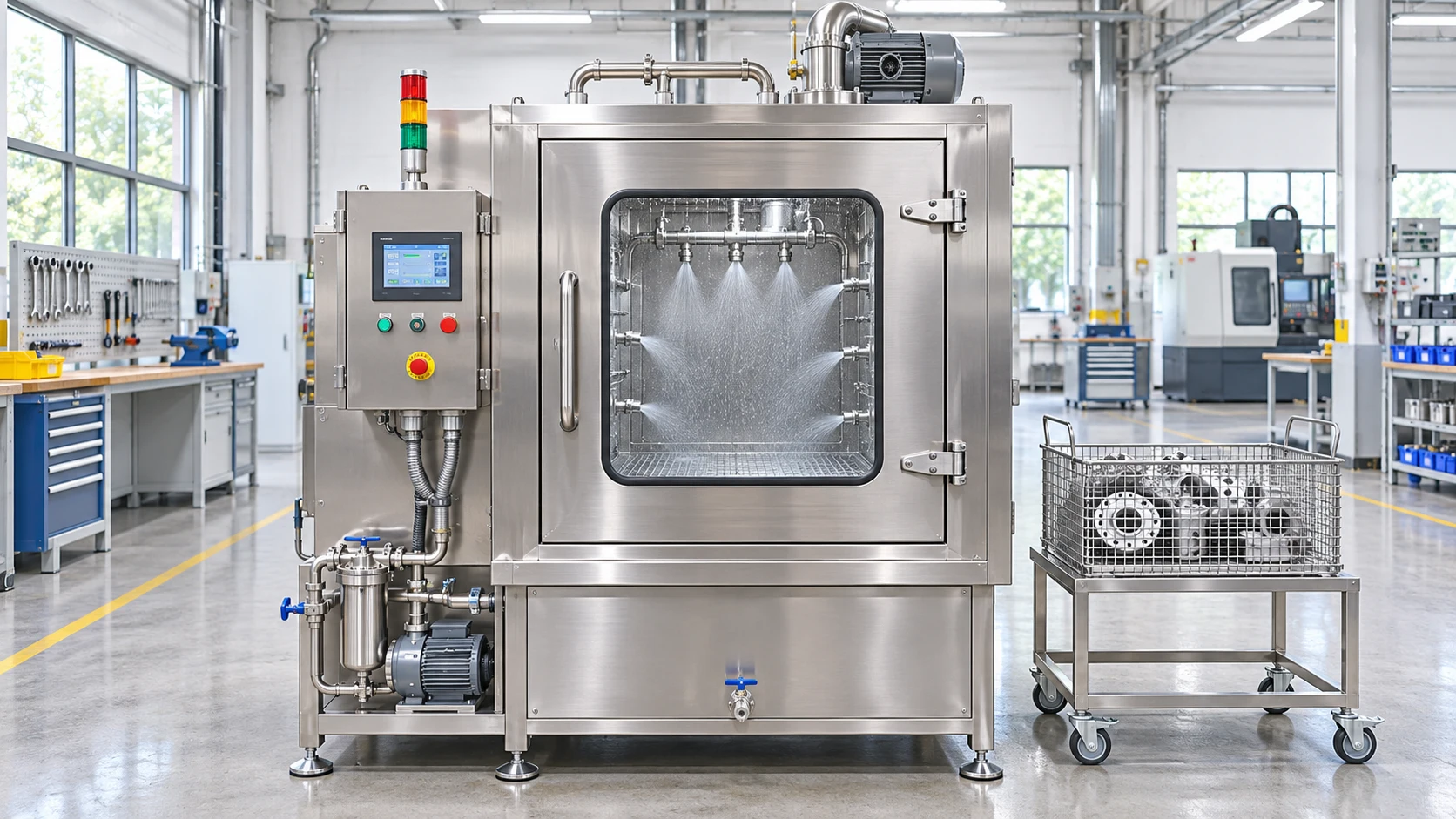
| Spray washing | The surfaces are accessible to directed spray, or fixtures can present them to the nozzles. | Check shielded surfaces and fixture contact points, as well as oil and chip removal. |
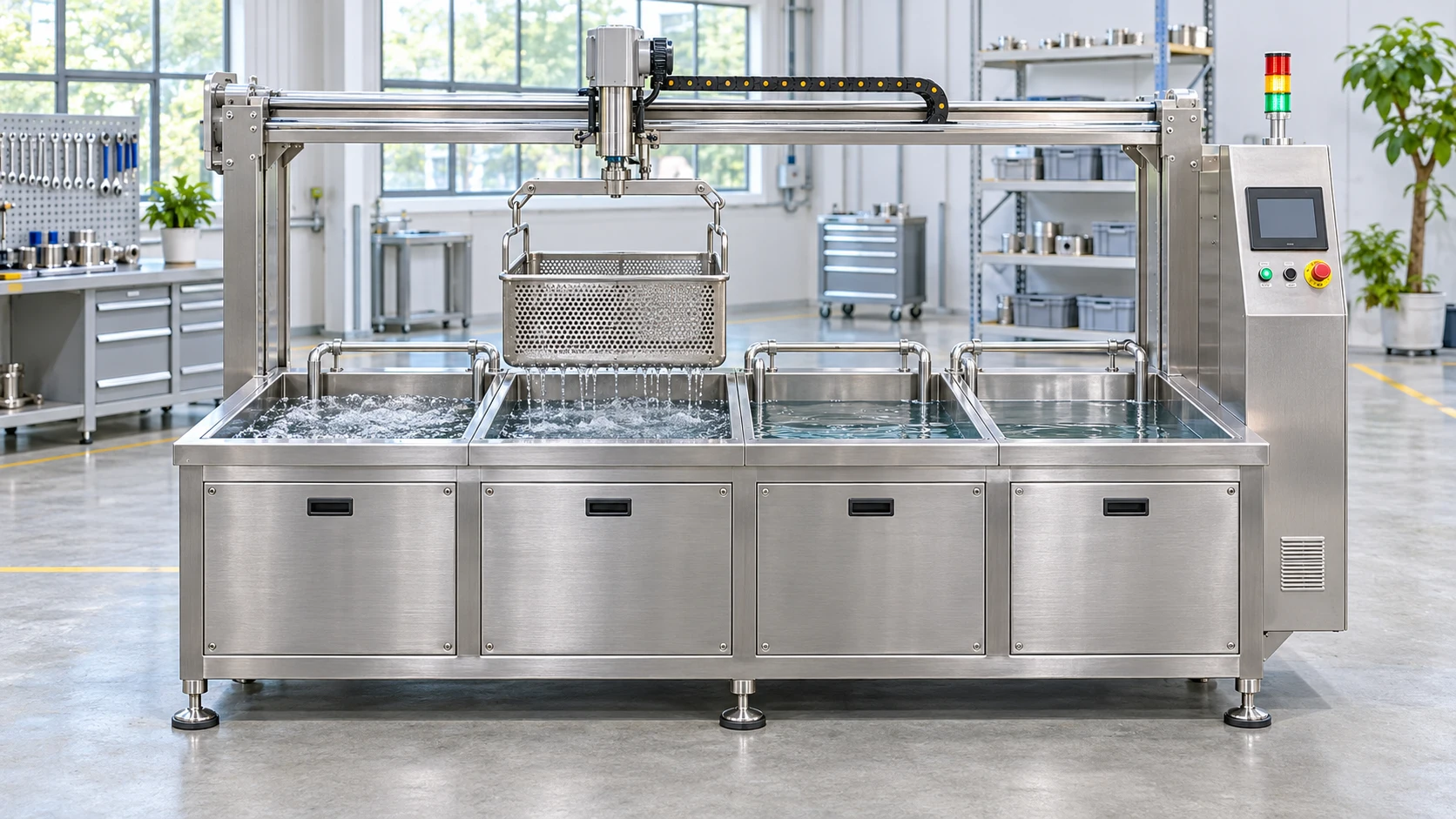
| Ultrasonic immersion | Parts can be immersed and liquid can reach the areas of concern. | Check for trapped air, basket contact, drainage, material compatibility and the finished condition. |
Map the contamination before choosing a process. Record where machining oil, loose chips or other residues collect. Mark blind holes, recesses and surfaces that cannot touch a fixture. Specify the next operation: a part going straight to assembly may have a different drying or cleanliness requirement from one going to storage.
Choose how the parts should move

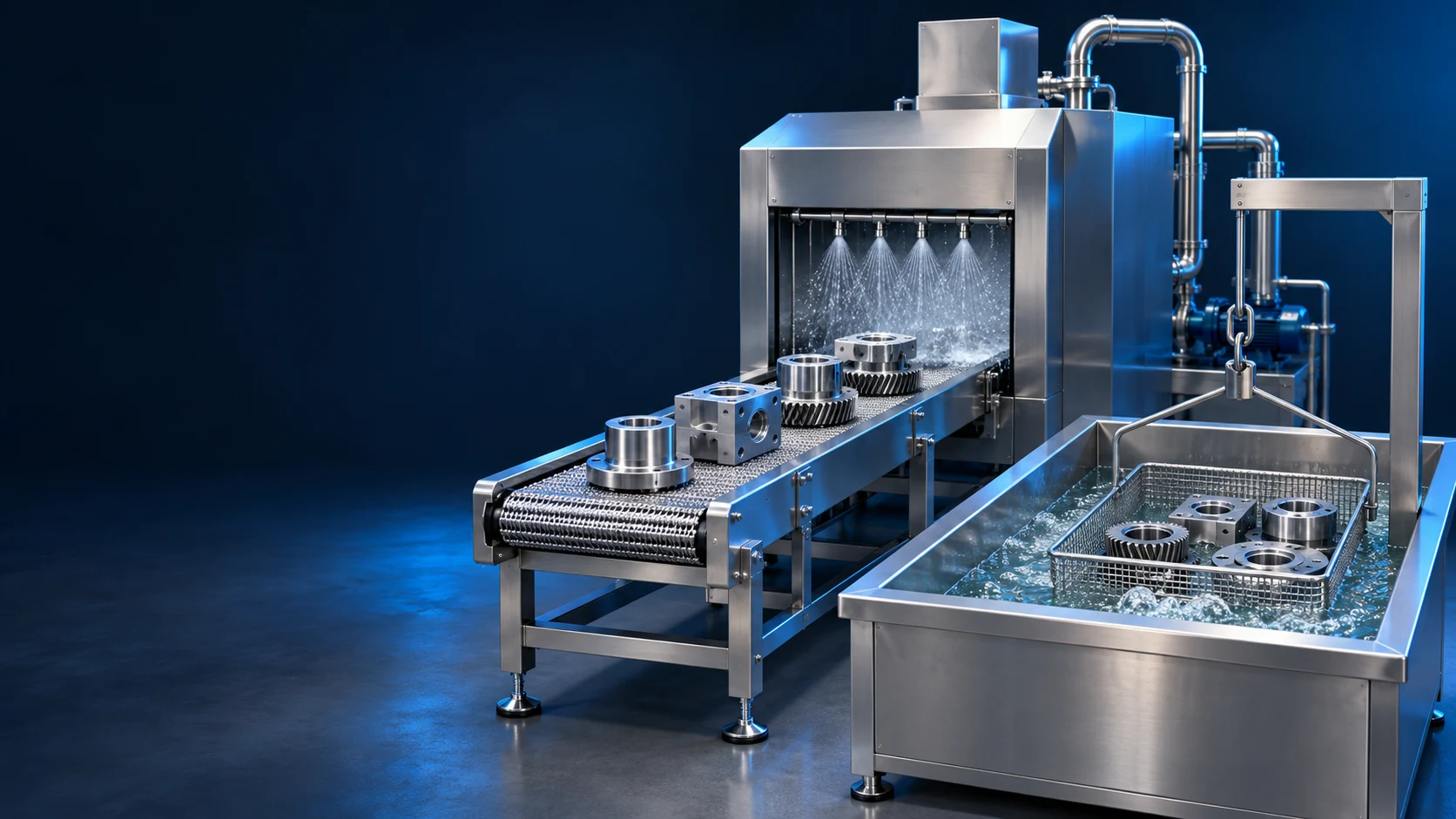
Use the part range and production rhythm to compare conveyor handling with indexed handling. A conveyor can connect successive stages along a production flow; define part pitch, loading and transfer height. An indexed arrangement presents parts at defined stations; check fixture orientation, station timing and how different parts are changed over.
Treatment time and output interval are separate requirements. A part can remain in treatment for longer than the interval between completed parts when multiple parts or stages are in process. Ask suppliers to state their assumptions for loads, stoppages and changeovers before comparing quoted output.
Agree what a satisfactory result looks like
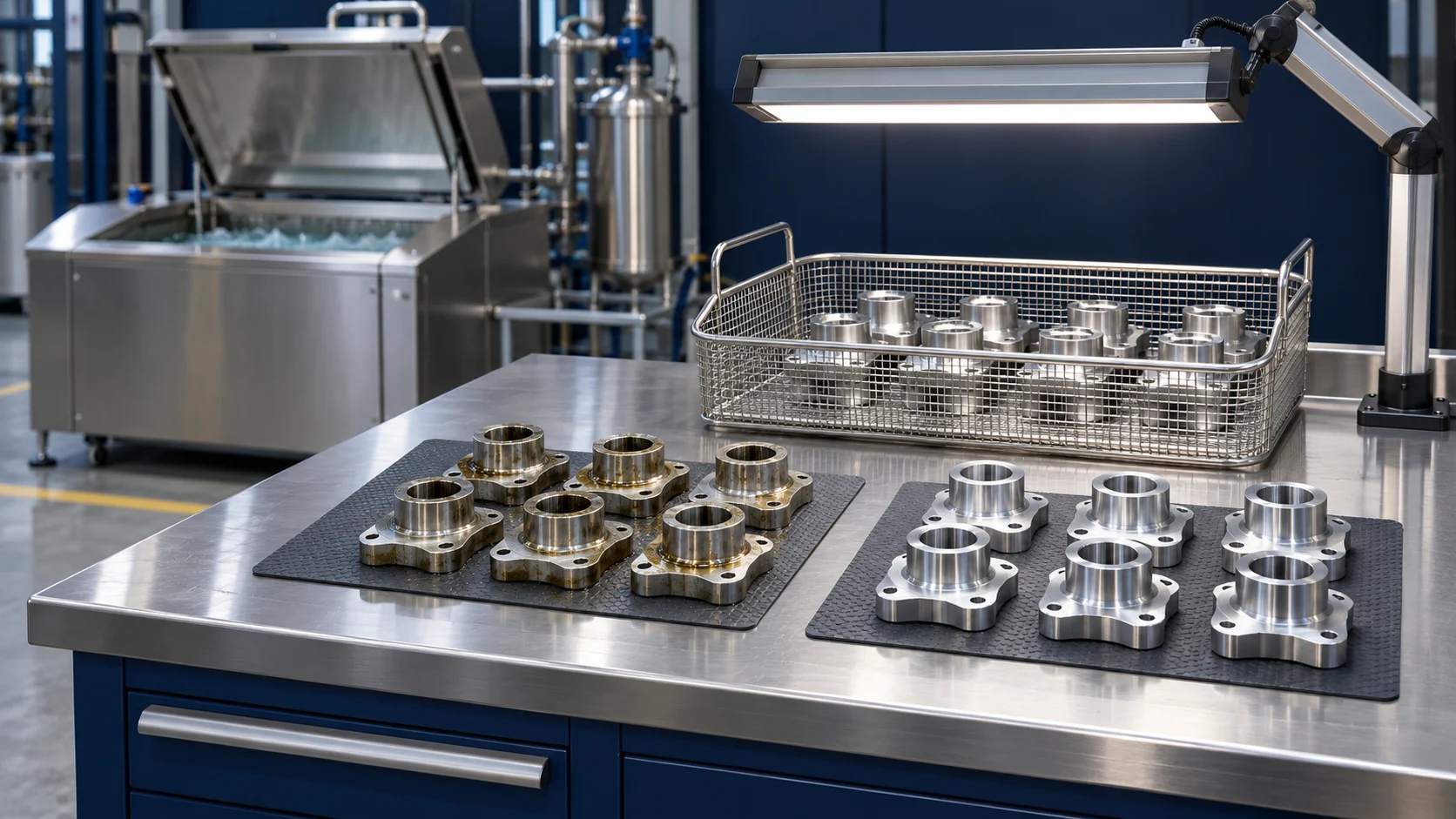
- Describe the incoming parts, including material, dimensions, contamination and representative variants.
- Define the completed part condition: which surfaces matter, what must be removed, what can remain and how dryness will be checked.
- Agree which samples, loading pattern and measurement method will be used.
- Identify limits or visual checks and record which document governs each result.
Where particle cleanliness matters, agree the inspected surfaces and reporting basis before comparing results. The technical cleanliness report guide explains what the report fields can establish. Bring representative parts to the sample evaluation discussion before finalizing the machine layout.
Ready to explore equipment for your parts?
Bring your drawings, process requirements and production targets into your enquiry.
Organize your requirements