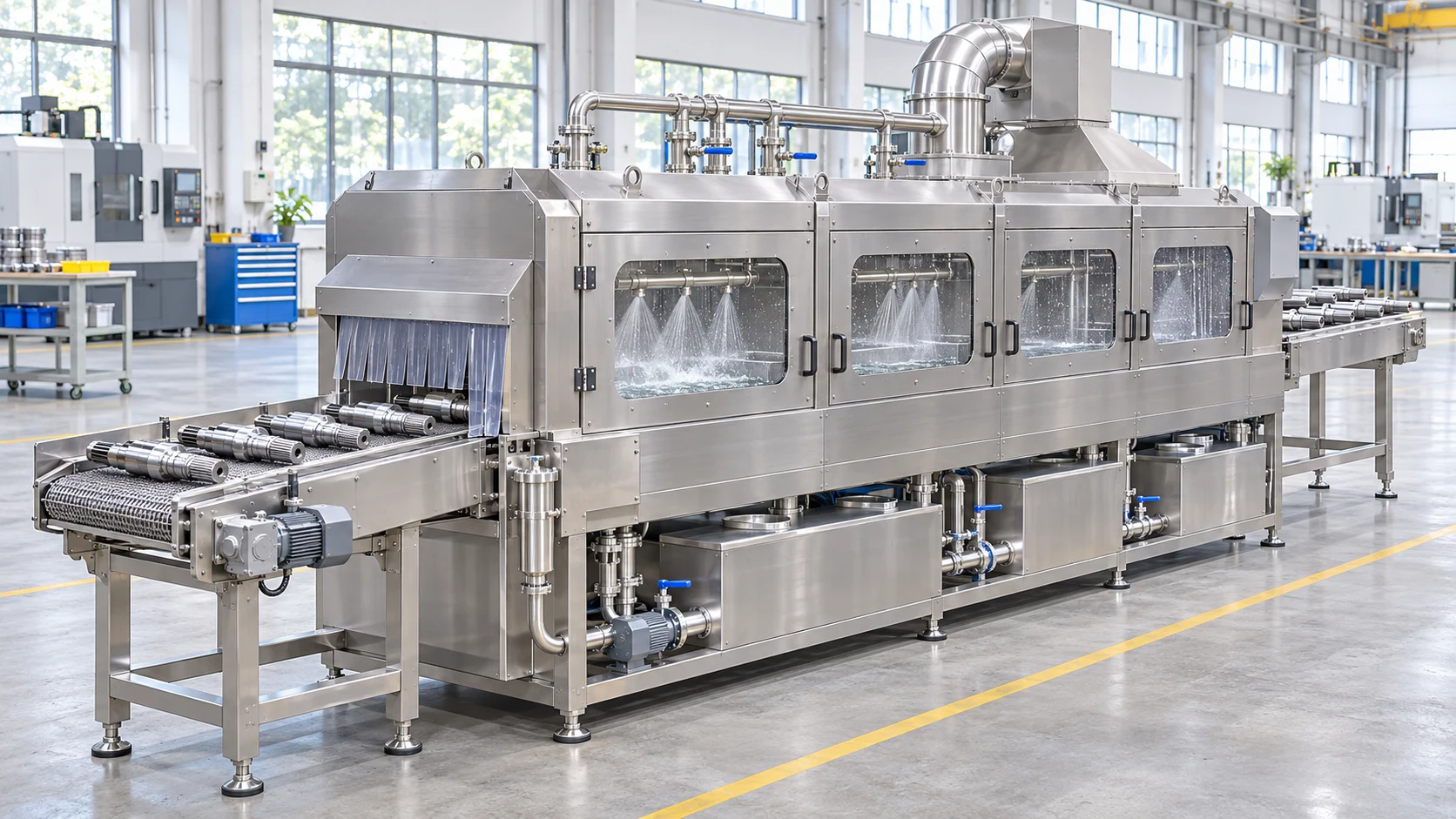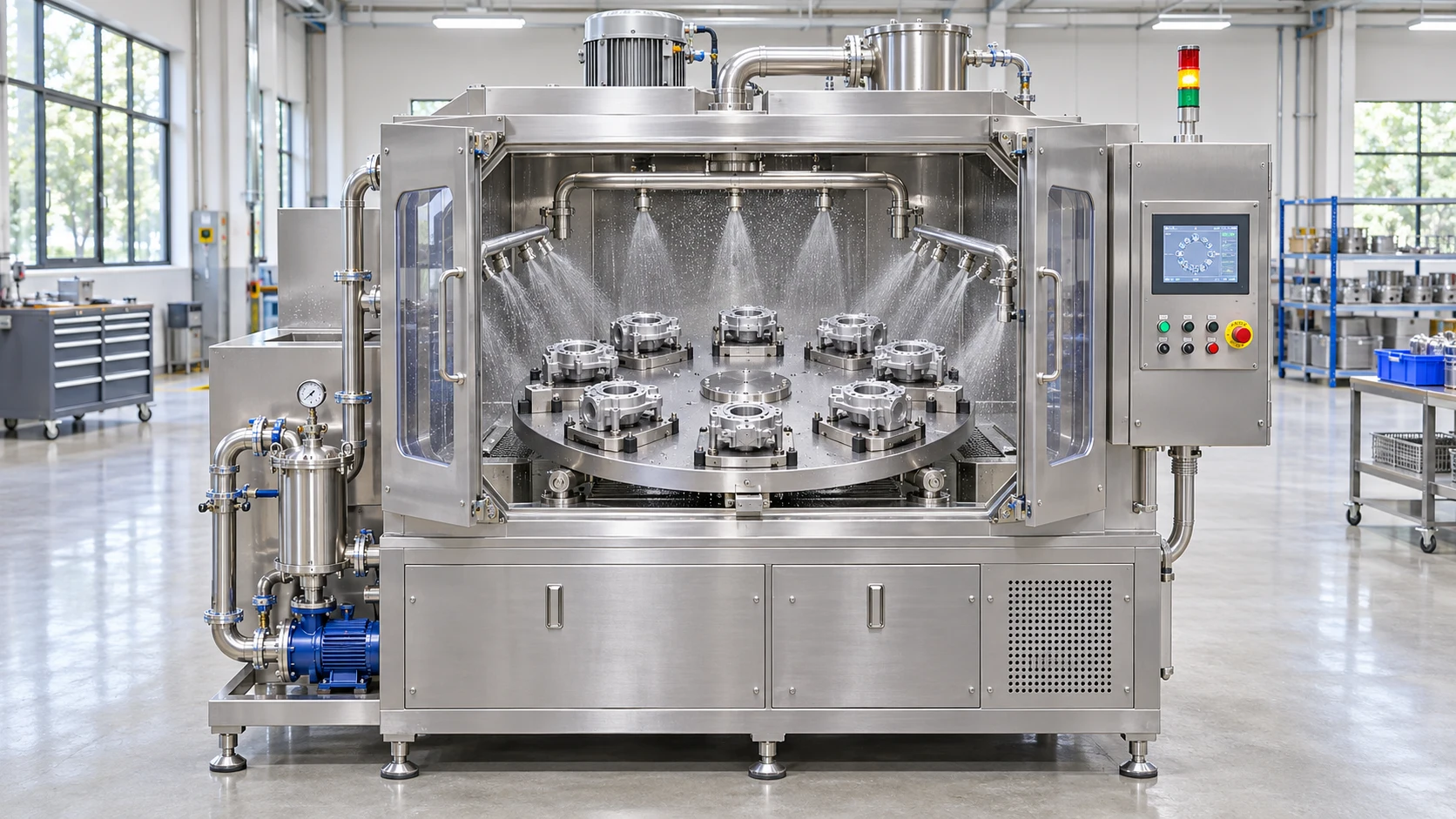
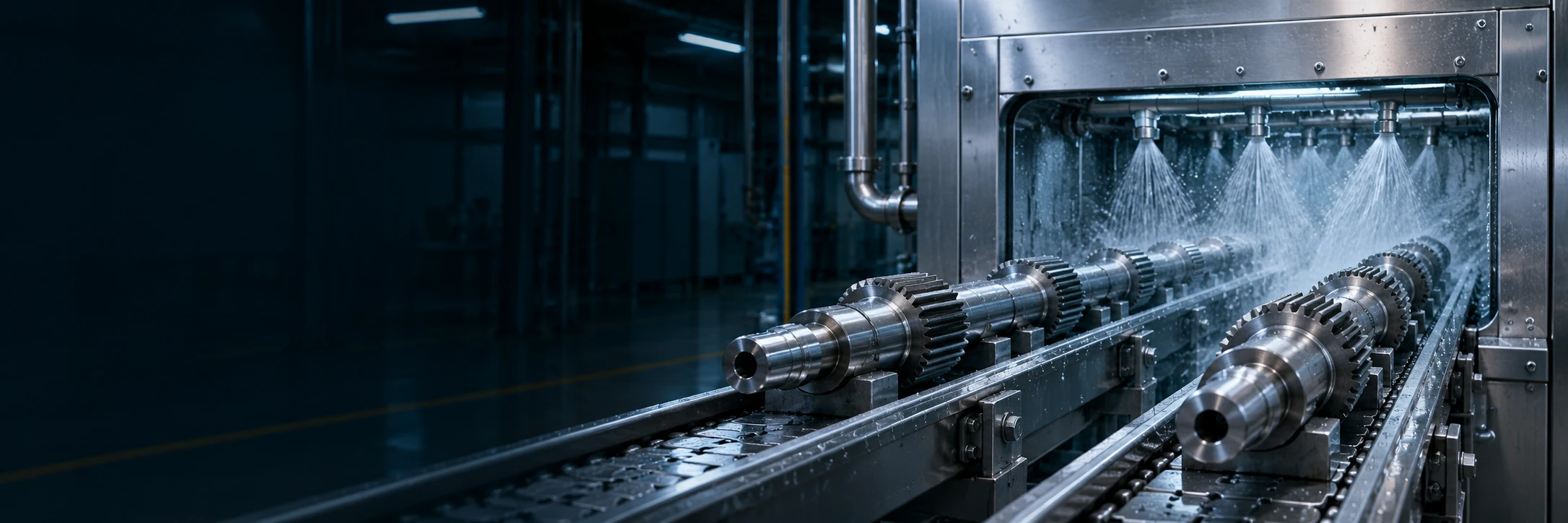
A conveyor parts washer connects workpiece loading, washing, rinsing and drying in a continuous flow. Planning begins with the incoming contamination, component geometry, required finish and target parts per hour.
Component condition before and after cleaning

Describe the workpiece material and incoming oil, particles or other residues. Identify holes, recesses and surfaces that can retain contamination or liquid. Include any restrictions on cleaning chemistry, temperature or surface contact.
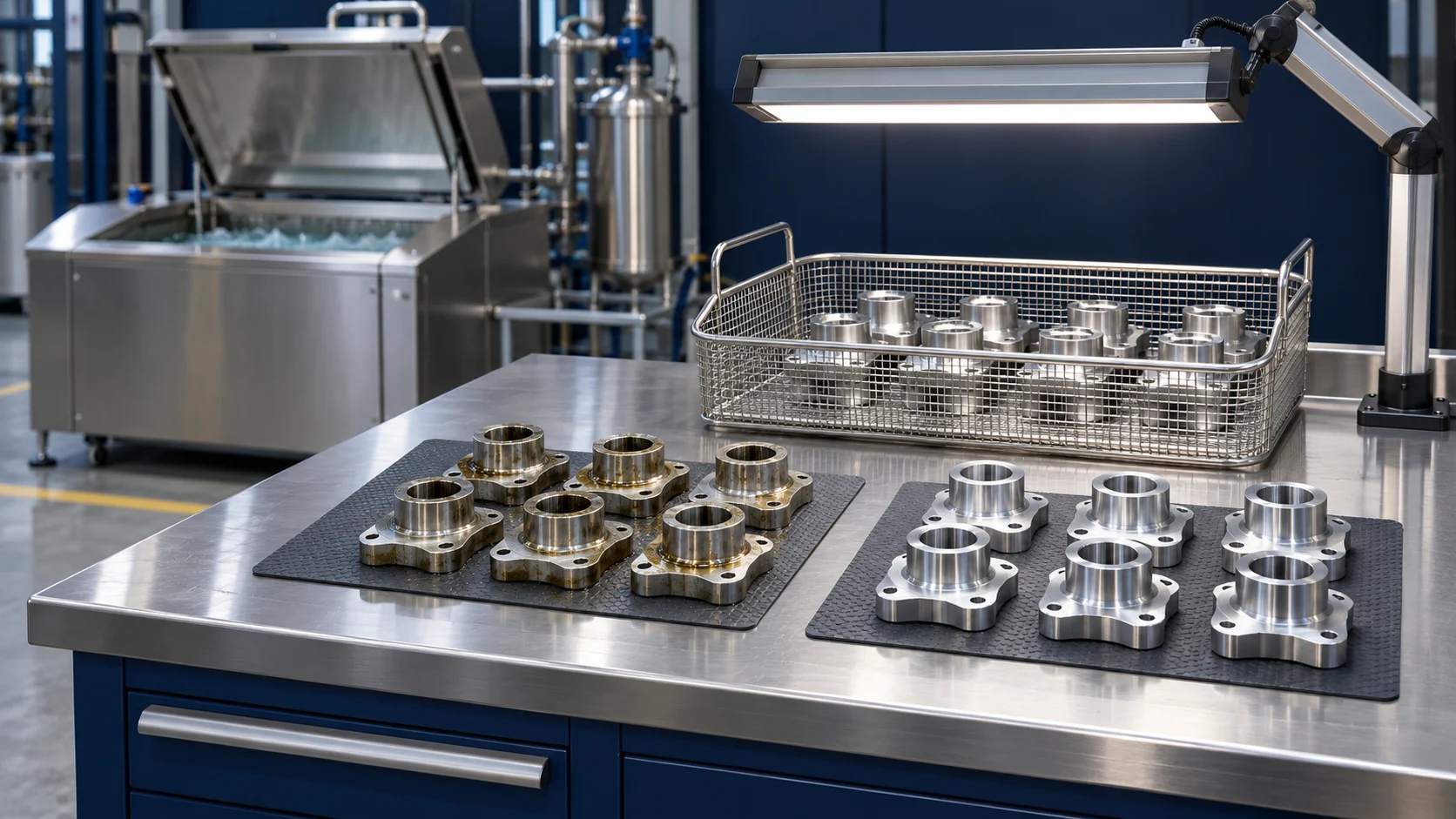
Next, describe the condition needed by the following manufacturing operation. Assembly, further machining and other processes may have different surface and dryness requirements. Where particulate cleanliness is specified, include the sampling and measurement method with the enquiry.
Washing, rinsing and drying stages

Spray washing treats incoming contamination. Rinsing removes cleaning-liquid residues, while air blow-off and hot-air drying help remove retained liquid. The sequence is selected for the workpiece and its required finished condition.
Part orientation and drainage influence the drying arrangement. Show where liquid can collect and which surfaces need to remain accessible during treatment. For a process using ultrasonic cleaning, include the associated rinsing, transfer and drying stages in the layout.
Loading space and workpiece orientation

Belt width, usable transport width, process opening and the part-and-fixture dimensions each describe a different aspect of loading space. Include supports and fixtures when showing the component in its travel position.
Part weight, spacing and stability guide the conveyor arrangement. For a family of components, share the variants that affect loading clearance, treatment access or drainage. The loading pattern also helps plan guide rails and the transfer to adjacent stations.
Conveyor speed and production output
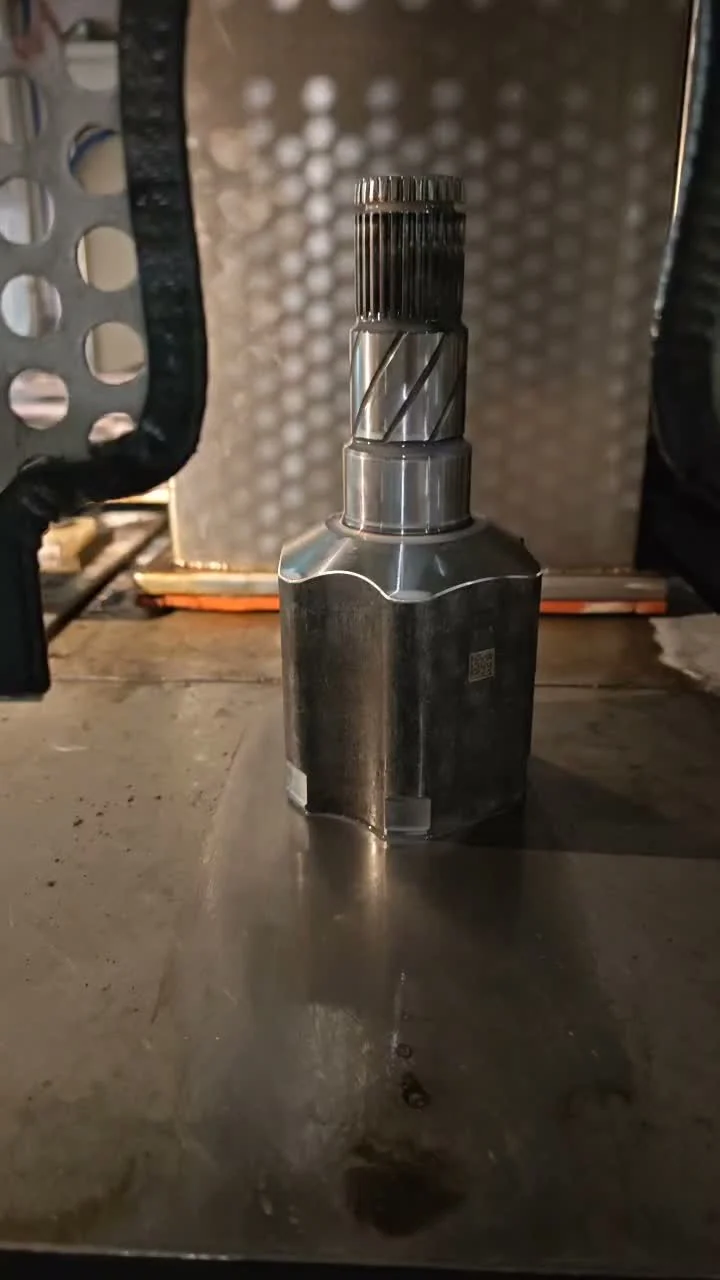
Conveyor speed works with part spacing to determine how frequently finished components leave the machine. Process-zone length determines how long a component remains in a washing or drying stage.
Several components can occupy different stages at the same time. Provide both the required output and the planned loading pattern so movement and treatment time can be considered together. For indexed equipment, include the transfer time and the time at each process position.
Liquid management and site services

Circulation, filtration, oil management and heating support the wash process. Access to nozzles, tanks and service points is included when planning maintenance space.
Share the available electrical supply, water, compressed air and drainage connections. Add the infeed and outfeed heights, available floor space and control signals for connected stations. A site layout helps bring the washer, operator access and maintenance areas together.
Sample testing and your enquiry

Choose sample components with typical production contamination and geometry. Include the intended loading orientation, required finished condition and evaluation method. Process settings and the results help refine the proposed washing and drying sequence.
For an initial enquiry, prepare component drawings, material, weight, contamination description, output target and site layout. Explore conveyor parts washers, compare indexed cleaning, or prepare your project enquiry.
Ready to explore equipment for your parts?
Bring your drawings, process requirements and production targets into your enquiry.
Organize your requirements